LightBlog

lundi 22 juin 2020

Samsung Capture update adds new options to the Screen Recording toolbar

Samsung’s Android devices have had an inbuilt screen recorder for quite some time but the feature was limited to only certain parts of the company’s custom Android user interface. A system-wide screen recorder wasn’t announced until the launch of the Galaxy Note 10 and eventually, it started reaching other devices with One UI 2.0 based on Android 10. Despite being late to launch a native screen recorder, Samsung has added some interesting annotation features like support for on-screen drawing as an overlay. Now, the company is adding more improvements to the screen recording feature with the latest update to a system app called Samsung Capture.

Although minor, these new changes improve the functionality of the Screen Recording feature. To begin with these changes, the toolbar that appears on the top right corner of the screen at the time of recording now gets new Play, Stop, and Pointer buttons.

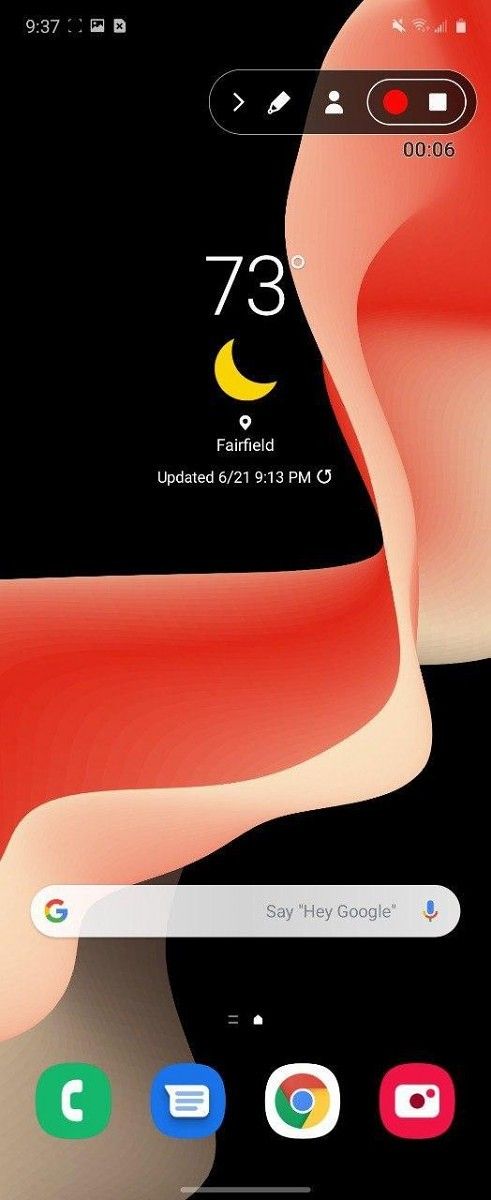
Samsung One UI 2 screen recording

In addition, Samsung has added a “Skip Countdown” button to begin screen recording right away instead of waiting for the counter to count back from 3.

For improved sorting of recordings, the Screen Capture app on phones running One UI 2 or One UI 2.1 will including the name of the app that is recorded for the longest time in the file name. Screenshots taken on Samsung devices are already named like this.

The update also enables screen recording on Samsung devices during a call, even though the voice from the call will not be recorded. Lastly, the update allows cropping the size of the screenshot for “Screen write” or on-screen annotations along with new Undo and Redo buttons.

Samsung One UI 2 screen recording

The updated version of Screen Capture is available through the Galaxy Store. You can be downloaded on any Samsung device using this link. This feature will not work on smartphones from other brands.

The Screen Recording feature can be activated from the Quick Settings menu on a Samsung smartphone. If you can’t find it, just tap on the three-dot button and then on “Button Order” to reveal the hidden Quick Settings button. Using this option you can unhide the screen recorder on most Samsung smartphones running Android 10 with One UI 2.0 and above.

If you use an older Samsung phone that runs Android 9 Pie or Android Oreo, you can use the steps in this XDA forum post to use the screen recorder on your device.

The post Samsung Capture update adds new options to the Screen Recording toolbar appeared first on xda-developers.


from xda-developers https://ift.tt/3eppcuU
via IFTTT

phh’s custom Android 10 GSI adds better support for the Razer Phone and new “My Device” settings

Google first announced Project Treble with Android 8.0 Oreo in an effort to bring faster updates to Android devices and minimize the long-standing issue of fragmentation. XDA’s developer community quickly discovered another interesting benefit with this modularization approach: the ability to boot an AOSP Generic System Image (GSI) on any supported device with an unlockable bootloader. After making history by successfully booting AOSP GSI on the Huawei Mate 9, XDA Recognized Developer phhusson has become a lead mentor in the field of community-made custom GSIs. The developer has now updated his vanilla Android 10 based Project Treble GSI AKA Quack Phh-Treble with a new option that greatly simplifies the setup process of various device-specific Treble app presets.

Quack Phh-Treble — XDA Discussion Thread

Dubbed as “My device“, the new section can be found under Treble settings. End users can directly contact their device maintainer with a tap of a finger through this option, as well as visit a community of users for that device. Developers who want to become maintainers, on the other hand, can enlist their names by submitting a simple pull request. The section also serves as a central location for most of the device-specific fixes you need to apply in order to fine-tune the GSI for your Android device (e.g. tweaking a particular vendor fingerprint property), eliminating the tedious trial-and-error part. Here’s a screen recording courtesy of phhusson showing off the newly introduced “My Device” settings.

The latest version of Quack Phh-Treble, tagged as v220, also introduces several platform fixes and a handful of new features like waking up the device using Home hardware button. Moreover, there is a new fix to correctly expose all supported refresh rates on the Razer Phone. There is no change the Android security patch level (SPL), though, as phhusson already integrated June 2020 security patches with his custom Project Treble GSI.

The complete changelog is as follows:

  • Fix boot on Moto One Macro
  • Fix media on Pie vendors
  • Home hardware button can wakeup the device
  • Treble settings now list resolution in addition to FPS, some devices can expose multiple resolutions and multiple FPS.
  • Fix double tap to wake on Galaxy A51
  • Fix fingerprint gestures on Moto One Action
  • Fix various SELinux fixes to improve integrated su on Samsung devices
  • Fix recent/home/back keys on some Samsung devices
  • Expose all refresh rates on Razer Phone (originally only 120Hz was available)

Download Quack Phh-Treble v220

Planning to try out phh’s Android 10 GSI? You should first determine your device variant using the Treble Info app linked below. Users are also advised to take an off-device backup, as the flashing process will require you to factory reset your device.

Treble Info (Free+, Google Play) →

The post phh’s custom Android 10 GSI adds better support for the Razer Phone and new “My Device” settings appeared first on xda-developers.


from xda-developers https://ift.tt/2CvveMs
via IFTTT

Realme C11 is launching soon with the new MediaTek Helio G35 and square camera bump

Realme has made its mark for products that offer high value for money, even exceeding other value offerings from brands like Xiaomi. Despite its presence across a wide range of segments, Realme has not stopped catering to its core target group – i.e. of affordable smartphones. In February, Realme launched the entry-level Realme C3 which offers an “excellent gaming performance” thanks to its MediaTek Helio G70. Now, the company is set to release another entry-level device – Realme C11 – with the unannounced MediaTek Helio G35 SoC, an alleged 5000mAh battery, and a fresh change to the typical linear camera design that Realme has been using since last year.

Realme C11 was recently certified by Thailand’s telecom regulatory body NBTC and the certification also confirms the model number RMX2185 for the device. The device has also seems to have been certified by Indian standardization body BIS (as captured by @Sudhanshu1414) but the listing is no longer present on its website. Despite the now absent listing, it could mean that the Realme C11 might also launch in India soon.

realme c11

Meanwhile, a Malaysian tech news website Lowyat reports that Realme Malaysia has sent out press invites for Realme C11 with an image of the phone in which the camera has been covered by a golden leaf. The invite reportedly also confirms that the Realme C11 will be the first device in the world to be powered by a MediaTek Helio G35 chipset, which hasn’t been announced by MediaTek yet.

Realme Malaysia has also posted about launching a Helio G35-powered phone on its official Facebook and Instagram handles while another post confirms that the Realme C11 is the phone being launched.

Here's another Dare to leap moment! Are you ready? We will be bringing a new smartphone with #WorldsFirst MediaTek Helio G35. Stay tuned! #realmeMalaysia

Posted by realme on Friday, June 19, 2020

The Realme C11 has also reportedly been spotted on China’s CQC certification platform and this listing reveals the battery capacity of 5,000mAh along with 10W of charging. Those are the only details about the device that are confirmed as of now.

realme c11 mediatek helio g35 poster

Meanwhile, an alleged poster of the Realme C11 is making rounds on social media. This poster was first shared by Twitter account @i_am_myself7 and it shows a square-shaped dual camera setup of the phone by means of a digital render. We are not sure of the legitimacy of this poster but the device in the image here does look similar to the one shared with Realme Malaysian with the local press.

Realme C11 launches in Malaysia on June 30th at 11 AM over a live stream. We will include more details in this story as we learn about the smartphone.

Posted by realme on Sunday, June 21, 2020


The post Realme C11 is launching soon with the new MediaTek Helio G35 and square camera bump appeared first on xda-developers.


from xda-developers https://ift.tt/3142FzP
via IFTTT

Download: OPPO Find X2 and Find X2 Pro receive Android 11 Beta 1 build with ColorOS 7.2

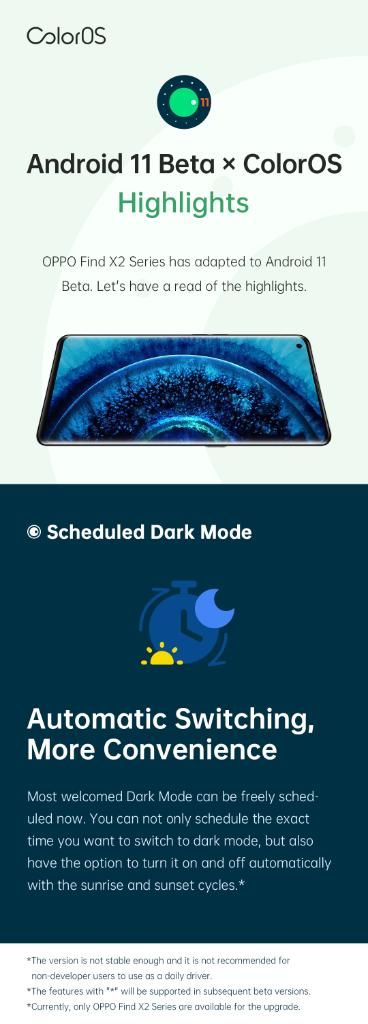
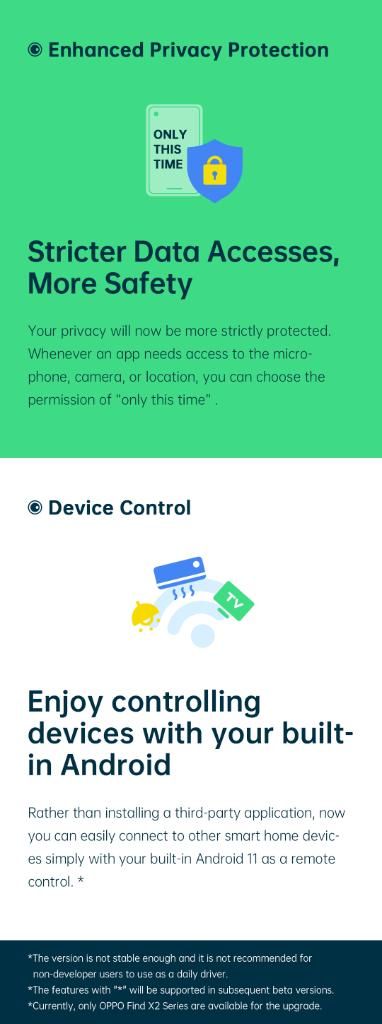
Android 11 Beta 1 represents the first set of Android 11 builds that are being made available to users beyond the supported Google Pixels. Several OEMs have come forward to officially offer Betas for their Qualcomm Snapdragon 865-powered flagships. OnePlus released Beta 1 builds for the OnePlus 8 and OnePlus 8 Pro; Xiaomi has offered builds for the Mi 10, Mi 10 Pro and the POCO F2 Pro / Redmi K30 Pro 5G; and Vivo has released Android 11 Beta builds for the Vivo Nex 3S 5G and iQOO 3. OPPO had promised to release builds for the OPPO Find X2 and Find X2 Pro, and the phones are now onboard the Android 11 hype train with official Android 11 Beta 1 builds with ColorOS 7.2.

OPPO Find X2 Forums || OPPO Find X2 Pro Forums

Android 11 News on XDA

As promised, the new Beta builds for the current generation flagships come with ColorOS user experience on top, which is a different approach than what the other participating OEMs have taken by shipping AOSP-based builds. OPPO further notes that GMS apps will be replacing the OEM apps in case of duplicate functions.

OPPO Find X2 and Find X2 Pro Android 11 Beta 1 ColorOS 7.2

Download Android 11 Beta 1 for the OPPO Find X2 series

Caution: The builds mentioned on this page are for developers only and are not intended to be used by end-users. These builds are early releases and contain bugs and other system instabilities. They also wipe your device completely. It is highly recommended that you back up your data before proceeding. Please exercise your own discretion.

You can download Android 11 Beta 1 from the following links. We also recommend keeping the rollback files handy:


Flashing Instructions

Keep in mind that both the steps below will completely wipe your device.

To flash the Android 11 Beta builds, follow the instructions below:

  1. Download the specific update file for your phone from the links given above.
  2. Copy the file to the root directory (aka the base directory) of your phone’s internal storage.
  3. Power off your device.
  4. Press and hold Power + Volume Down. This will boot your phone into recovery mode.
  5. In Recovery Mode, select “Install from storage” > Select the update file > “Install”.
  6. Let the update install. This will take a few minutes. Do not interrupt the process.
  7. Once the success message displays on-screen, reboot your phone.

To roll back to Android 10 with ColorOS 7, follow the instructions below:

  1. Download the specific rollback file for your phone from the links given above.
  2. Copy the file to your phone’s internal storage.
  3. With the File Manager app, locate the file that you have copied.
  4. Click on the file. Follow through the prompts on the screen to downgrade.

Let us know your experience with the new release in the comments below!

The post Download: OPPO Find X2 and Find X2 Pro receive Android 11 Beta 1 build with ColorOS 7.2 appeared first on xda-developers.


from xda-developers https://ift.tt/316yxDR
via IFTTT

POCO F2 Pro, Redmi Note 9, Motorola One Fusion+, and Samsung Galaxy A21s forums are now open

In spite of the global outbreak of COVID-19, we have witnessed several smartphone launches globally for different price ranges. Smartphone brands including Xiaomi, Motorola, Samsung have launched multiple devices in the last couple of months. We’re now opening up dedicated XDA Forums for POCO F2 Pro, Redmi Note 9, Motorola One Fusion+, and Samsung Galaxy A21s to spur discussion and third-party development for these devices.

POCO F2 Pro

POCO F2 Pro

POCO F2 Pro is the long-awaited true successor to the revered flagship killer – POCO/Pocophone F1. The POCO F2 Pro, announced last month, is powered by Qualcomm’s Snapdragon 865 chipset. A rebranded Redmi K30 Pro, the POCO F2 Pro comes with 64MP quad cameras, up to 8GB of RAM and 256GB of storage, and a notchless AMOLED display complemented by a pop-up selfie camera.

POCO F2 Pro (Redmi K30 Pro) XDA Forums

The POCO F2 Pro starts at €499 in Europe and is a fairly powerful and compelling device for this price.

Redmi Note 9

Redmi Note 9 color variants

After launching the Redmi Note 9 Pro (Note 9S) and the Note 9 Pro Max in March, Xiaomi launched the global variant of the Note 9 Pro on the last day of April 2020. At the same event, Redmi Note 9 with a MediaTek Helio G85, 48MP quad cameras, and a hole-punch display was launched for a starting price of $199.

Xiaomi Redmi Note 9 XDA Forums

Being a budget device from Xiaomi’s uber-popular Redmi Note series, the Note 9 is expected to be received well.

Motorola One Fusion+

The latest device under the Motorola One branding is the new Motorola One Fusion+. It comes with a 6.5-inch notchless Full HD display, a pop-up selfie camera, Snapdragon 730 mobile platform (Snapdragon 730G on the Indian variant), and a 5000mAh battery for a fairly attractive price of about $225 (Europe prices yet to be revealed).

Motorola One Fusion+ XDA Forums
Buy Moto One Fusion+ on Flipkart

This seems like Motorola’s most well-rounded phone in several years and although it comes with stock Android, we hope to see a lot of custom development given the value the phone offers.

Samsung Galaxy A21s

Samsung Galaxy A21s was unveiled last month followed by a launch in India last week. It is a mid-range device from Samsung with a 48MP quad-camera setup, hole-punch display, Samsung’s Exynos 850 chipset, and a 5000mAh battery for a starting price of about $215.

Samsung Galaxy A21s XDA Forums

The post POCO F2 Pro, Redmi Note 9, Motorola One Fusion+, and Samsung Galaxy A21s forums are now open appeared first on xda-developers.


from xda-developers https://ift.tt/3hIWYgC
via IFTTT

Amazfit Stratos 3 with integrated GPS, Wi-Fi and music storage launched in India for ₹13,999 (~$185)

Back in August 2019, Huami launched three smartwatches in China. Of these, the Amazfit X stood out for its futuristic design, while the Amazfit GTS stood out for being a cheaper lookalike (but not quite) of the Apple Watch. The Amazfit “Smart Sports Watch 3” flew under the radar, with its name and branding lost in translation, and its features under-appreciated in the presence of other headlining products. Now, this device is getting another chance at making its impact, this time in the Indian market, as Huami has launched the Amazfit Stratos 3 smartwatch in India.

Amazfit Stratos 3: Specifications

Specifications Amazfit Stratos 3
Case Details
  • 48.6mm diameter x 13.4mm thickness
  • 40.4g
  • Stainless steel and zirconia ceramic bezel
  • Reinforced plastic bottom
  • Stainless steel buttons
Strap
  • 120mm (long) 75mm (short)
  • 22mm width
  • Silicone material
Display
  • 1.34″ MIP Transflective TFT LCD (round)
  • 320 x 320 resolution
  • Corning Gorilla Glass 3
Connectivity
  • Bluetooth 4.2 + BLE 5.0
  • Wi-Fi 2.4GHz 802.11 b/g/n
Sensors
  • BioTracker PPG optical sensor
  • 6-axis acceleration sensor
  • 3-axis geomagnetic sensor
  • Air pressure sensor
Multiple Positioning Three Modes:
  • GPS + GLONASS
  • GPS + GALILEO
  • GPS + BEIDOU
Water Resistance 5 ATM ( up to 50m depth)
Battery and Charging
  • 300 mAh
    • Smart Mode: 7-day battery life
    • Ultra Endurance Mode: 14-day battery life
  • USB magnetic charging stand, pogo pin connection
Compatibility
  • Android 5.0+
  • iOS 10.0+

With the Amazfit App

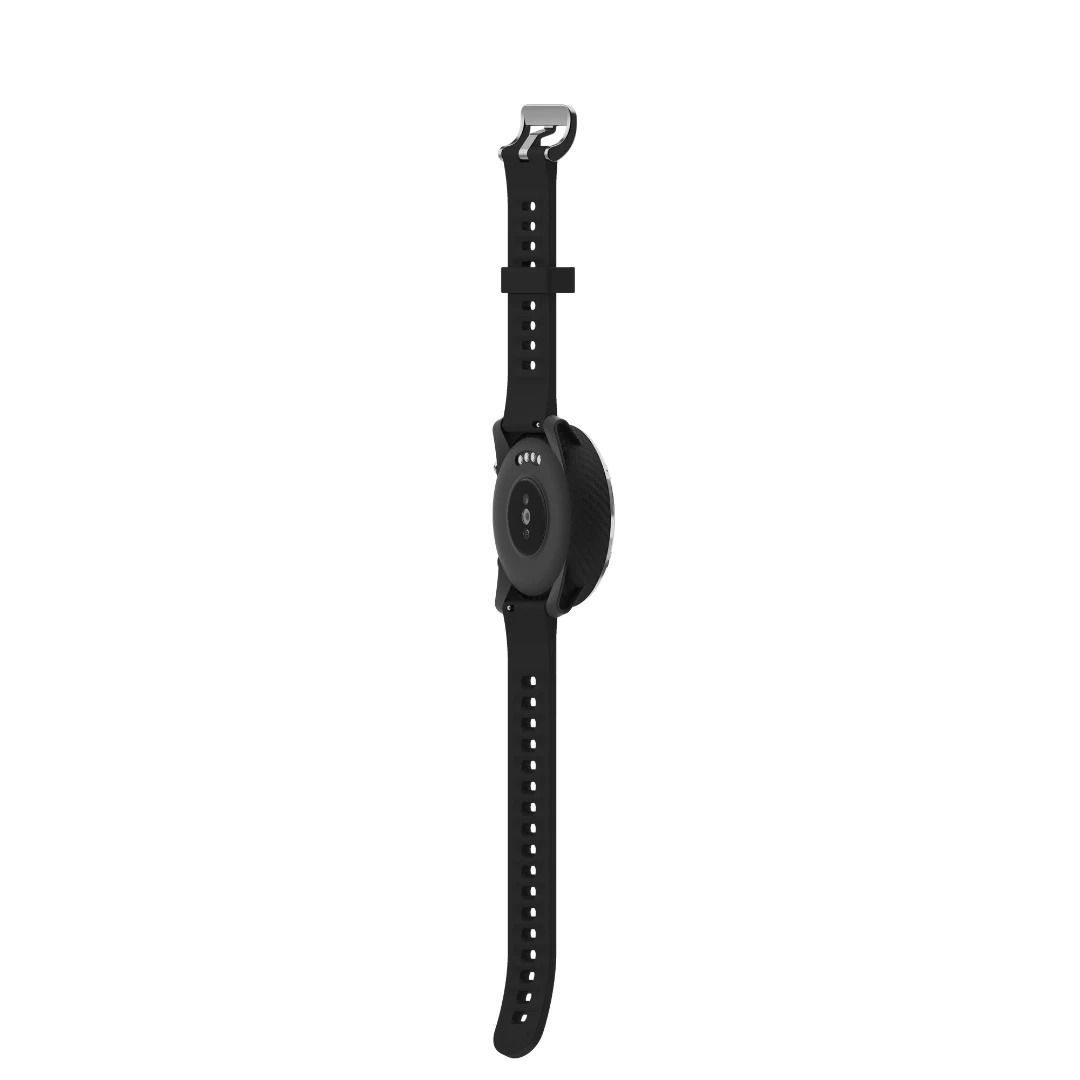
The Amazfit Stratos 3 looks unapologetically like a sports watch. Unlike the Amazfit GTR and Amazfit GTS, the highlight of the device is not the display, but the ability to be smarter than the other two. For instance, the Stratos 3 comes with integrated GNSS solutions, meaning you don’t need to stay connected to your smartphone for GPS and route tracking. Further, you also get Wi-Fi connectivity and 2GB of internal storage for storing music, and you can connect the watch with Bluetooth earphones. The net result of this combination is that you can effectively use the smartwatch for your workouts without needing to have your phone around. For me, this fixes the issue of needing to lug around a bulky smartphone on a run, as music and GPS tracking is now taken care of by the watch itself. Note that there is no app integration or cellular connectivity, so your music needs to be stored locally as .mp3 files on the smartwatch.

Of course, the Amazfit Stratos 3 can also track exercises with up to 80 sports modes and continuous heart rate monitoring. There are buttons for navigating the interface, in case you find the touchscreen interaction cumbersome during exercise. Another highlight feature is the Ultra Endurance Mode which will pause certain other functions and still let the smartwatch track heart rate and exercises for up to 14 days, effectively doubling the battery life.

Pricing and Availability

The Amazfit Stratos 3 will be available for purchase in India starting today, 8 PM IST, on Amazfit India as well as on Flipkart. The product will cost ₹13,999 (~$185). While the smartwatch is more expensive than the Amazfit GTS and GTR, it does have the added smarts to justify the increase.

Buy the Amazfit Stratos 3 from Flipkart

The post Amazfit Stratos 3 with integrated GPS, Wi-Fi and music storage launched in India for ₹13,999 (~$185) appeared first on xda-developers.


from xda-developers https://ift.tt/3duqZO9
via IFTTT

New Google Maps features revealed: Better Uber fare estimates, connections to public transit route options, and more

Google Maps is one of Google’s flagship services, having served countless users over the years. Features such as Live View AR navigation, new transit features such as crowdedness predictions, assisted public transit routes, and more — all work together to make Google Maps the de-facto navigation solution for so many users. While the use of Maps has fallen off these past months as people try and stay indoors because of the COVID-19 pandemic, Google continues to improve the app, both in the context of its utility within the pandemic and outside of it. Now, several new in-development features have been spotted on their way to a public release and rollout.

Prolific reverse engineer Ms. Jane Manchun Wong has shared some upcoming features to Google Maps. First up, Google is working to improve fare estimates from ride services by sharing route information with them. The in-development feature currently appears to be limited to Uber, but one can presume that other popular services in the region may also be supported at launch. There’s also a toggle present, so one can select which services they are comfortable with for their route data.

Further, deeper integrations have been spotted for bike-sharing service “Bay Wheels”, which will show up as an option for directions, soon.

Next, route options will also see some improvements. Travelers often need to jump modes of transport, especially for daily commutes since the best available public transit service may not be within walking distance. So, route options will get a few different combinations that should aid in planning a journey through various modes for the first and last-mile connectivity.

While all of these upcoming features focus on making transit easier, Maps is also working on changing the discovery experience for points of interest. Place cards are getting a design refresh that will integrate the photographs of the place within the card, instead of the photos appearing behind the card as they do right now.

All of these features are currently in development. There is no word on when they will roll out publicly, but we expect them to land sooner rather than later.

The post New Google Maps features revealed: Better Uber fare estimates, connections to public transit route options, and more appeared first on xda-developers.


from xda-developers https://ift.tt/3fKR2BX
via IFTTT