LightBlog

vendredi 12 juin 2020

Realme releases a flash tool for installing ColorOS/Realme UI updates

Realme might have separated from its parent company OPPO, but both of them are internally using a common foundation when it comes to custom Android skin. Realme UI is so far still a fresh coat of paint on top of OPPO’s ColorOS, and it is definitely not close to stock Android as initially promised by Realme’s CEO. In fact, Realme is still utilizing OPPO’s proprietary OZIP file format to pack their update packages. Not only do you have to brute force these OZIP packages to extract the AES key in order to convert them to regular recovery flashable ZIP files, but you also can’t directly use them to perform a clean flash using the standard Fastboot interface.

The custom development community around Realme devices is expanding rather quickly, primarily because of the low-cost revolution they have brought to the smartphone space. Realme does publish kernel source codes and allows bootloader unlocking, which acts as strong catalysts in the aftermarket development scene. The phones themselves, however, can get bricked for a fair few reasons in the journey of porting a custom ROM or trying out a new mod, and the unavailability of an official flash tool makes everything complicated to restore. The lack of a flash tool basically forces users to visit a service center to carry out a simple job of unbricking, which is not at all appreciated by the community.

But now, after teasing their flash tool for a little over a year, Realme has finally come up with something productive. The initial version of the Realme Flash Tool is now available for download, although the Realme X50 Pro is the only compatible device as of yet. Users can flash OFP packages with this tool, which is different from the OZIP firmware listed on the company’s download portal. The flashing process will completely wipe the target device so you should backup your personal data before playing with the flash tool.

realme_flash_tool

As you can see, the UI of the flashing app is remarkably similar to the Mi Flash Tool developed by Xiaomi. However, Realme Flash Tool isn’t programmed to work with Qualcomm Emergency Download Mode (EDL). It is more of a GUI wrapper for the Fastboot binary, thus you have to unlock the bootloader of the target device before flashing. Realme India CMO Francis Wang promised that the broken fingerprint sensor issue on Realme phones after bootloader unlocking should be resolved with the release of the flash tool, although we can’t verify the veracity of that claim at this moment.

It is worth mentioning that downgrading to a lower Android version isn’t supported by this tool, although you should be able to switch to a lower version of ColorOS or Realme UI if the underlying Android layer remains unchanged. Contrary to what Realme claims, the Windows-only tool isn’t specifically tied to the Indian variant of the Realme X50 Pro. You should be able to flash any Snapdragon or MediaTek-powered Realme phone with this flasher, provided you have your hands on the appropriate OFP package. The company is planning to add more phones from its portfolio to the list of supported devices by releasing required OFP files in the coming future.

Download Realme Flash Tool


Source: Realme Community (1, 2)

The post Realme releases a flash tool for installing ColorOS/Realme UI updates appeared first on xda-developers.


from xda-developers https://ift.tt/2XYMEt7
via IFTTT

How to restore the missing pocket mode toggle in OxygenOS on some OnePlus phones

OxygenOS from OnePlus provides a heavily customized Android experience and a variety of useful features and options. For example, you can find a built-in “Pocket mode” in OxygenOS that prevents accidental touches when the device is kept inside your pocket. However, a toggle to disable this particular option is apparently missing on devices like the OnePlus 7 and the OnePlus 7 Pro after the most recent OxygenOS update.

OnePlus 7 Forums ||| OnePlus 7 Pro Forums

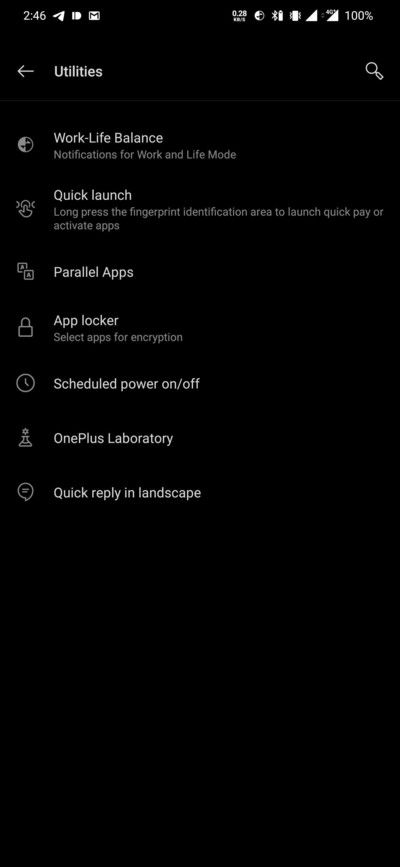
The OnePlus 7 family recently received OxygenOS 10.3.3 (OxygenOS 10.0.6 for the European variants) that bumped the Android security patch level to May 2020 and brought in features like Dolby Atmos support for the new OnePlus Bullets Wireless Z earphones. Open Beta users, on the other hand, got the same security patch level in the form of Open Beta 14 a few days before the stable channel rollout. It might be a coincidence, but the “Pocket mode” toggle under Settings > Utilities seems to be missing right after these updates.

oneplus_6_pocket_mode oneplus_7_pro_no_pocket_mode

Although the toggle is visually absent, the pocket mode detection algorithm is always running in the background. It eventually breaks ambient display-related features like double-tap to wake and pickup to show in low light conditions, because the phone believes that it is still in your pocket. Due to the fact that OnePlus tends to re-use a majority of the UI codebase of OxygenOS across their devices, the glitch may affect non-OnePlus 7 (Pro) phones as well.

Hopefully, there is an easy way out, but you have to be rooted in order to apply the fix. All you need to do is add the following text snippet to the end of /system/etc/feature_list file on your phone (just before the last ]).

,
   {
       "featureName": "OP_FEATURE_ENABLE_POCKETMODE_SWITCH"
   }

Reboot the phone after saving the changes and the “Pocket mode” toggle should now be visible under Settings > Utilities. Note that the default status of the option should be “disabled” after adding the above code, thus you may need to toggle it twice to properly turn off pocket mode detection.


Source: OnePlus Forums

The post How to restore the missing pocket mode toggle in OxygenOS on some OnePlus phones appeared first on xda-developers.


from xda-developers https://ift.tt/3cSwCFm
via IFTTT

[Update: Confirmed] Android 11 may finally remove Android’s 4GB file size limit for video recordings

Update (6/12/20 @ 4:00 PM ET): It’s official: Android 11 finally gets rid of the 4GB file size limit for video recordings.

In 2019, smartphone brands have made huge jumps in camera quality, especially when it comes to zoom and low-light. On the other hand, video quality hasn’t been given the same amount of attention. That could change in 2020 with the Qualcomm Snapdragon 865’s improved ISP. Yet, even as Android smartphones are shipping with larger internal storage capacities, have faster modems, and are now supporting 5G networks, an old limitation prevents most of these phones from saving video files that are larger than 4GB in size. However, that could change in Android 11, the next major version of Android that’s set to release in 2020.

I’ll try to summarize the reasoning behind this limitation without going too deep into the technical aspects. Basically, Google decided that Android’s MediaMuxer and MPEG4Writer classes, which are respectively responsible for muxing (combining) video files and saving them as MP4 files, should support outputting an MP4 file with a maximum size of 2^32 – 1 bytes, which is approximately 4GB. This decision was made in early 2014, back when the Google Nexus 5 with its maximum 32GB of internal storage was still on the market, SD cards were still widely in use, and the first phones with 4K video recording had just come to market (Galaxy Note 3). Thus, there wasn’t much demand to save video files over 4GB in size: most phones didn’t have enough storage, SD cards formatted in FAT32 wouldn’t support it anyway, and few phones recorded in high enough quality to even meet that limitation. Fast forward 5 years and much has changed: there are now phones with 1TB of storage, SD cards are now the exception rather than the norm, and 4K video recording is ubiquitous, with 8K video recording soon to reach devices.

Today, if you record a 4K video on the Pixel 4, your video will reach 4GB in size in about 12 minutes; that’s at the default quality settings of 30fps for the frame rate and 48Mbps for the bitrate. After about 12 minutes of recording, the camera app will save the video and immediately begin recording another video – without the user noticing. When you check your phone’s DCIM folder, you’ll notice that what was supposed to be one continuous video recording has instead been split into multiple video files. For example, a 73 minute video recording on my Pixel 4 was split into 7 different files – all of which were seen by Google Photos as separate recordings. It’s not difficult to mux these MP4 files before uploading to Google Photos, but you’ll have to use a third-party app if you want to do so. Most people wouldn’t bother or know how to do so, I would imagine.

A 73 minute 4K30 video recording from my Pixel 4 split up into 7 different files.

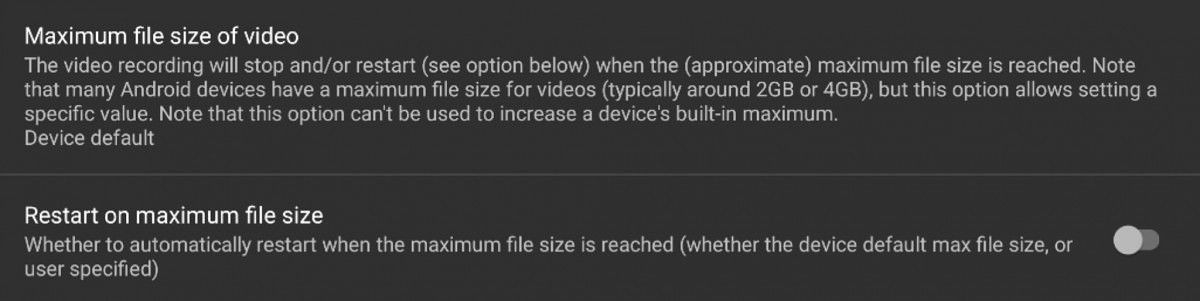
Developers have asked for a way to record video files larger than 4GB in size for years now, and it seems that change could finally be coming in Android 11. According to the description of a new commit in the AOSP gerrit, Google is updating Android’s media classes to remove the 32-bit file size limitation. Specifically, Android will now “use [a] 64bit offset in mpeg4writer,” which allows Android “to compose/mux files more than 4GB in size.” During testing, Google successfully composed a file of around 32GB in size, and in a separate test, even managed to fill up the entire storage capacity of the phone with a single recording. A maximum file size of 2^64 -1 bytes is comically large and would never really ever be met, so we expect Google to limit the MediaRecorder API or OEMs to limit their stock camera apps to support a more reasonable maximum file size. However, apps like OpenCamera that use the Camera2API should still be able to arbitrarily set whatever maximum file size they want without having to worry about the 32-bit file size limitation.

OpenCamera’s Video Recording Settings

The commit has not been merged yet, but when it does, we expect the change to be reflected in Android 11 since that’s the next major Android release. The first Android 10 beta went live in March of this year, so expect to see an Android 11 beta in March of 2020 followed by a stable release sometime in August of 2020. With phones from Xiaomi and Samsung expected to support 8K video recording, this change is welcome – albeit way overdue.

Thanks to XDA Recognized Developer luca020400 for the tip!


Update: Confirmed

Videographers rejoice, Android 11 officially gets rid of the 4GB file size limit for video recordings. Android 11 Beta 1 finally removes the limitation, but you’ll need to use a camera app that supports it. Right now, not even Google’s own camera app supports it yet. The popular app Open Camera does seem to support it already and we should see more apps, including Google Camera, add support too.

Source: Google | Via: Android Police

The post [Update: Confirmed] Android 11 may finally remove Android’s 4GB file size limit for video recordings appeared first on xda-developers.


from xda-developers https://ift.tt/3521peW
via IFTTT

Files by Google 1.0.315 tests a “Safe Folder” that hides and protects files with a 4-digit PIN

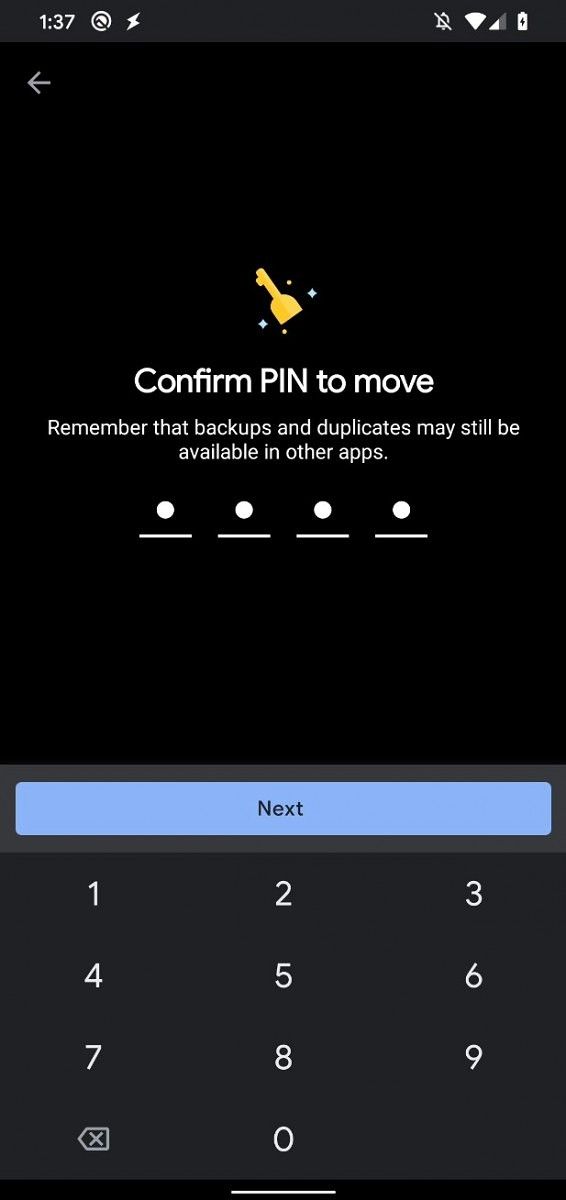
Files by Google is a file manager app that has become the de facto default file manager for Google Pixel devices on Android 11 as the AOSP Files app is now only accessible from storage settings. The latest version of the APK started to roll out recently, and it was also uploaded to APKMirror. Version 1.0.315 reveals work on a new “Safe Folder” feature that will allow you to hide and encrypt files using a 4-digit PIN.

An APK teardown can often predict features that may arrive in a future update of an application, but it is possible that any of the features we mention here may not make it in a future release. This is because these features are currently unimplemented in the live build and may be pulled at any time by the developers in a future build.

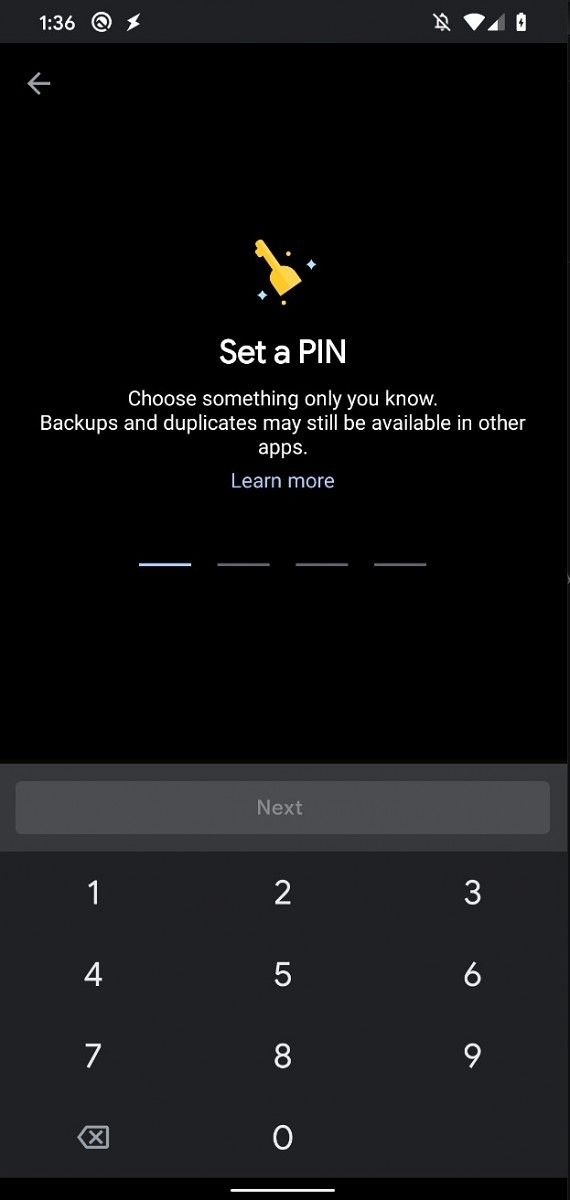
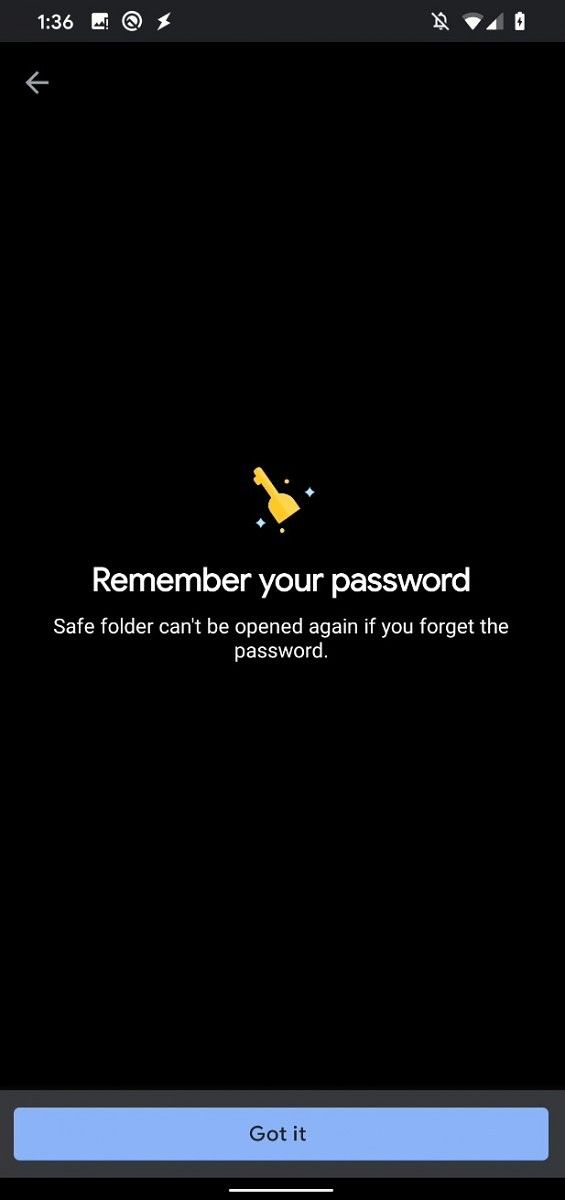
Strings for this feature were first spotted by 9to5Google earlier today, but we have fully enabled this feature in the Files by Google application. How it works is quite simple: A new “Safe Folder” button appears in the “Collections” section of the “Browse” tab. When you tap on the Safe Folder, you’ll be asked to set a 4-digit PIN. Once you set a PIN, it warns you that you can’t open the Safe Folder again if you forget the PIN. After setting up a PIN, you can move files by selecting one or more of them and then choosing “Move to Safe folder” in the menu.

Files by Google Safe Folder Files by Google Safe Folder Files by Google Safe Folder Files by Google Safe Folder

Under-the-hood, files are stored in a folder called .FilesByGoogle in the root directory of the external storage (located at /data/media/{user}). The contents of this folder are hidden from other applications thanks to a .nomedia file in the directory. The files themselves seem to be encrypted, so there’s indeed no way to recover them if you forget your PIN. If you uninstall the Files by Google app, the contents of the Safe Folder will not be deleted. However, when you re-install Files by Google, it won’t be able to read the old Safe Folder contents again. You can set up a new Safe Folder using the same (or different) PIN, and all new files moved to the Safe Folder will also be saved in the .FilesByGoogle directory.

This feature is not yet available for users in the latest version of the Files by Google app. However, once it rolls out, we will let you know.

Files by Google: Clean up space on your phone (Free, Google Play) →

Thanks to PNF Software for providing us a license to use JEB Decompiler, a professional-grade reverse engineering tool for Android applications.

The post Files by Google 1.0.315 tests a “Safe Folder” that hides and protects files with a 4-digit PIN appeared first on xda-developers.


from xda-developers https://ift.tt/3hn67vm
via IFTTT

Google Calendar enables Google Tasks integration for some users

Google Tasks was launched as a standalone app over two years ago and it has remained pretty barebones. It’s slowly gained more features, like a dark theme, but the beauty of it is the simplicity and Google integration. The company has been working on integration with Google Calendar going all the way back to October of last year. It seems to finally be live for more people.

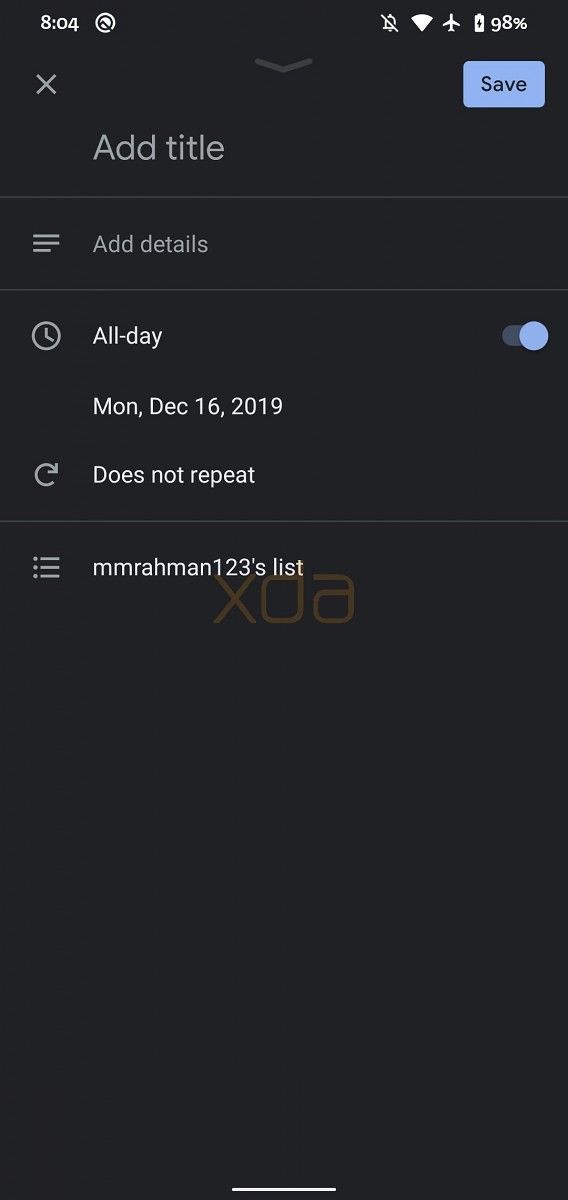
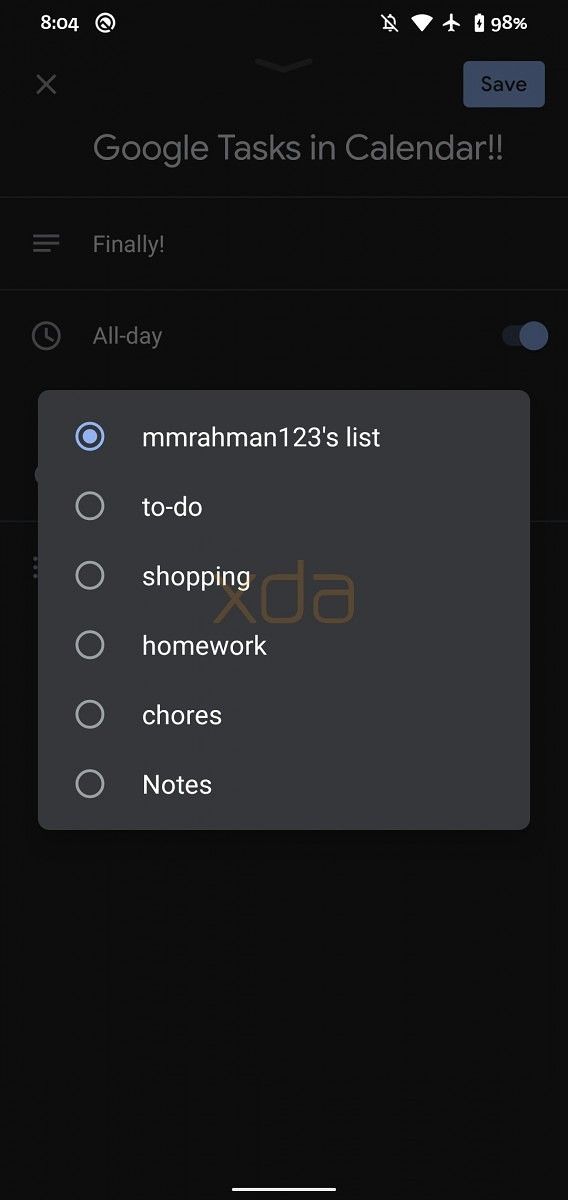
We first saw this integration between Google Tasks and Calendar late last year. The functionality adds a “Tasks” option when you tap the “+” FAB in Calendar. You can then create a task like you normally would right inside the Calendar app. It works the same way as you can currently create a Goal or Reminder.

Google Calendar tasks Google Calendar tasks Google Calendar Google Calendar

Screenshots from previous build of Google Calendar

The Tasks interface in Google Calendar is similar to creating an event. You can give the task a title, add details, choose a time and date, put it under a specific Tasks list, and decide if it should be recurring. This works even if you don’t have the Tasks standalone app installed on your device, so it could mean using one less app. Once included, you’ll see a new “Tasks notifications” section in the General Calendar settings.

This integration is still not official and it seems to be appearing as a server-side switch. However, it does appear to be showing up for more people, so a full release could be coming soon. Check your Calendar app to see if it’s there. Do you use Google Tasks and do you like them showing up on your calendar?

Google Calendar (Free, Google Play) →


Source: Android Police

The post Google Calendar enables Google Tasks integration for some users appeared first on xda-developers.


from xda-developers https://ift.tt/3cUiXNV
via IFTTT

G Suite users can now edit Google Calendar events directly in Gmail or Google Docs

Gmail and Docs on the desktop, along with a bevy of other Google services, features a side panel with shortcuts to Google Tasks, Keep, and 3rd-party add-ons. Google Calendar is another one of these shortcuts and it allows you to view the schedule for a single day, add events, and delete events. Soon, it will allow you to also directly edit events.

The current functionality for the Google Calendar panel is pretty nice, but it’s not the full experience. It’s annoying to be able to do most actions from the side panel but have to go over to Calendar to edit an event. Now, users will finally be able to do everything right from within the side panel. Editing an event includes the date/time, guests, location, and everything else you’d get in the full Calendar app. There’s also the “Find a Time” tool to see others’ calendar availability when scheduling events.

Google will be gradually rolling this feature out over the next couple of weeks for Google Docs and Gmail. It will be available for all G Suite customers, but we’d be surprised if it doesn’t come to consumers as well. A feature like this makes all of Google’s services work better together and that is ultimately the goal. The less you have to leave a Google app (even for another Google app), the better. Keep an eye out for this in the future.


Source: Google

The post G Suite users can now edit Google Calendar events directly in Gmail or Google Docs appeared first on xda-developers.


from xda-developers https://ift.tt/2zr6e7Q
via IFTTT

Android 11 has a hidden Recycle Bin for trashed photos and videos

Google is attempting to rein in the out-of-control app storage situation with “Scoped Storage.” Scoped Storage was introduced in Android 10 but has since been changed several times since its debut because of how dramatically it affects storage access for many Android applications. Google is enforcing Scoped Storage for apps that target API level 30, which is the latest API level coinciding with Android 11.

Rather than try to explain Scoped Storage all over again, here’s a graphic from Google’s “All things privacy in Android 11” talk that summarizes how Scoped Storage will affect storage access for apps in Android 11.

Android 11 Scoped Storage summary

Source: Google

One of the more interesting changes to storage access that has flown under the radar thus far is the introduction of a new “trashing” mechanism. This feature is detailed in Google’s “Storage access with Android 11” video. In essence, apps using the MediaStore API can trash a file instead of deleting it in order to give the user a chance to recover the file later. Google likens this feature to the Recycle Bin on PCs except Android’s recycle bin is hidden by default. Google states that apps with edit access to trashed files or that request user consent can display items from the recycle bin, though. Items that are trashed are automatically deleted by Android after 30 days.

Android 11 is also requiring that apps get consent from a user before modifying media files that the app doesn’t own. Another new feature that has been added is “favorites,” which allows media apps to add a “favorite” file status to designated media items so that other media apps will know that the user views these items as important. For instance, if the user stars an item in a gallery app, then other media apps can see that this item has been favorited.

Although Google’s talk doesn’t show an example of the MediaStore’s new trash concept, the API has been available since the first Android 11 Developer Preview. Developer Yuriy Mysochenko published an article on Medium back in February that goes over this new API, and he demonstrated the API in a sample app as shown below:

New MediaStore Trash API in Android 11. Credits: Yuriy Mysochenko.

In this demo, the app asked the user if they wanted to move a photo to trash which would temporarily delete the photo from the gallery. After 7 days, the photo would be permanently deleted from storage. Googler Roxanna Aliabadi mentions that the OS stores trashed items for 30 days, so the 7-day storage limit was likely increased since the first Developer Preview.

Developers interested in implementing this API can check out the documentation right now on the Android Developers website. Media apps can create a PendingIntent called createTrashRequest to prompt the user to trash an item, which then adds the flag IS_TRASHED indicating that a media item has been trashed. Trashed items are retained by the OS until DATE_EXPIRES, after which they are permanently deleted from storage. Media apps querying the MediaStore must explicitly query for trashed items using QUERY_ARG_MATCH_TRASHED as trashed items are filtered away from operations by default.

You can (and should) listen to this full talk on Scoped Storage if your app deals with storage access:

The post Android 11 has a hidden Recycle Bin for trashed photos and videos appeared first on xda-developers.


from xda-developers https://ift.tt/2UDmSbY
via IFTTT