The Huawei P40 Pro is! Check out our video at XDA TV with a full hands-on with the new photography-focused phone.
The post Huawei P40 Pro Hands-on [Video] appeared first on xda-developers.
from xda-developers https://ift.tt/2Uo7BvX
via IFTTT

The Huawei P40 Pro is! Check out our video at XDA TV with a full hands-on with the new photography-focused phone.
The post Huawei P40 Pro Hands-on [Video] appeared first on xda-developers.
Back in December, Huawei made plans to announce the P40 series in March. Suffice to say a lot has changed in the world since then, but Huawei is still moving forward with their announcement. The company has now officially revealed the Huawei P40, Huawei P40 Pro, and Huawei P40+ during an online launch event.
The Huawei P40 series was actually kicked off back in February with the P40 Lite, but today we’re finally seeing the flagship offerings. These are Huawei’s latest high-end smartphones for 2020 and they pack tons of features into attractive packages. The display sizes range from 6.1-inches to 6.58-inches, but in general, the family shares many of the same specifications.
| Specifications | Huawei P40 | Huawei P40 Pro | Huawei P40 Pro+ |
|---|---|---|---|
| Size & Weight |
|
|
– |
| Display |
|
|
|
| CPU | Kirin 990 5G OctaCore CPU:
|
Kirin 990 5G OctaCore CPU:
|
Kirin 990 5G OctaCore CPU:
|
| RAM | 8GB | 8GB | – |
| Storage | 128GB, nano memory card expansion | 128/256GB, nano memory card expansion | – |
| Rear Cameras |
|
|
|
| Front Cameras | 32MP, f/2.2 |
|
|
| OS | EMUI 10.1 based on Android 10 (no Google services) | EMUI 10.1 based on Android 10 (no Google services) | EMUI 10.1 based on Android 10 (no Google services) |
| Battery | 3,800mAh | 4,200mAh | 4,200mAh |
| Charging | 40W wired charging |
|
|
| Connectivity |
|
|
|
| Sensors | Fingerprint sensor, proximity sensor, ambient light, compass, accelerometer | Fingerprint sensor, proximity sensor, ambient light, compass, accelerometer | Fingerprint sensor, proximity sensor, ambient light, compass, accelerometer |
| Misc |
|
|
|
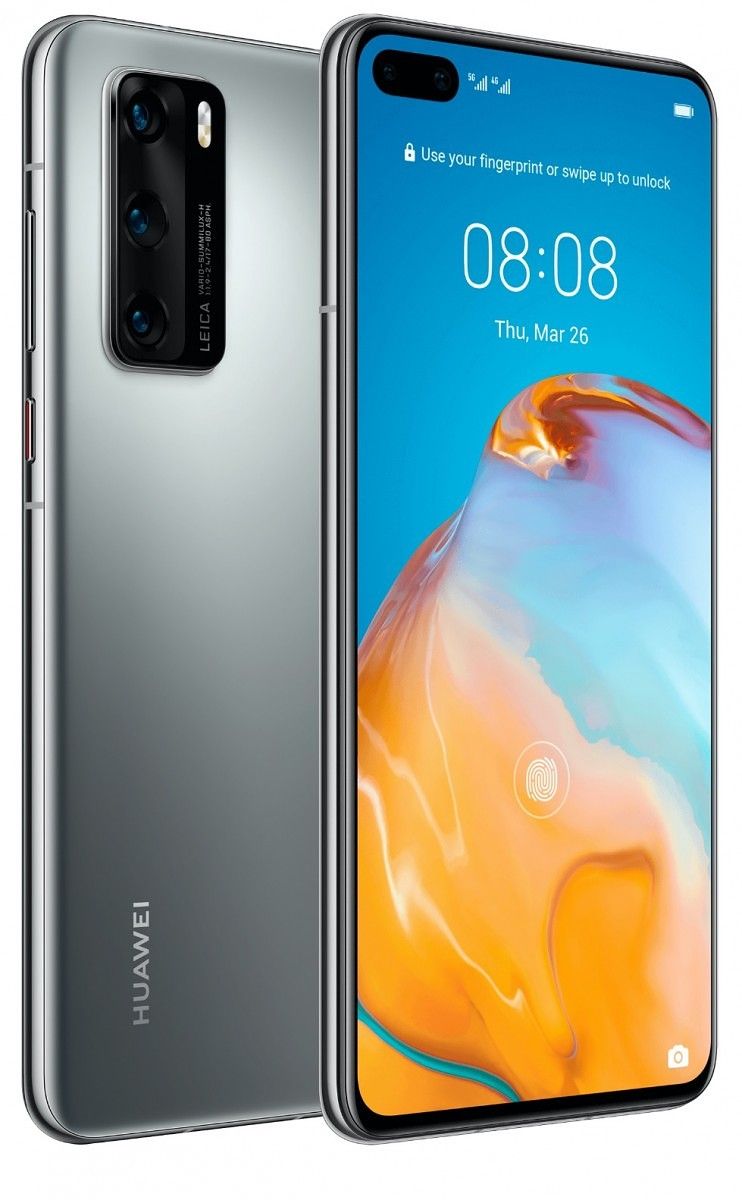

As you would expect, the design of all three devices is fairly similar. They all have rectangular camera modules positioned in the top left corner on the back. All three also feature hole-punch displays with the hole placed in the top left. Speaking of the display, the Pro and Pro+ have 90Hz displays, and Huawei has included what they are calling an “Overflow display” on these.

Huawei P40 Pro – Ice White
The Overflow display is a full edge-to-edge display. The edges of the display are curved on all four sides, creating a very smooth transition anywhere you touch. The usable area of the display curves ever so slightly over the edges, but it is far from the “waterfall” display of the Mate 30 Pro. This creates a stunning bezel-less feel without sacrificing usability. The Huawei P40 Pro and P40 Pro+ have 6.58-inch displays, while the P40 has a smaller 6.1-inch flat display.

Huawei P40 Pro+
The display is home to Goodix’s “ultra-thin” optical in-display fingerprint sensor as well. This sensor is 30% bigger and 30% faster than the sensor on the previous generation. Huawei also has some fancy new animations to go along with it. Goodix has also provided the AMOLED touch controller and smart audio amplifier for the P40 series.
Sticking with design, there are a number of color options available. All three models will be available in Ice White, Deep Sea Blue, and Black with glossy finishes. There is also Silver Frost and Blush Gold colors available in a matte finish. The P40 Pro+ has a ceramic back and is available in black and white.
If the giant camera modules didn’t give it away, the Huawei P40 series has a lot going on in the camera department. The headliner on all three devices is a 50MP RYYB 1/1.28” “Ultra Vision Sensor.” This camera boasts the highest light intake, higher dynamic range, and lower noise compared to the 40MP sensor on last year’s P30 series.
To go along with the bigger sensor, the Huawei P40 series also has a new HD Image Engine. This is the company’s 3rd generation AI image engine and it has a number of improvements. It goes pixel-by-pixel looking at lossless image separation, optimizing every scene possible, and it does this at any focal length. You can take large photos and chop them up into smaller photos without losing quality.
Another cool trick is “Super Resolution.” The phone takes information from the main camera and telephoto lens and merges them together to create a boosted resolution image. The features work with the XD Fusion Engine so you can zoom in and crop to create crisp images at any time of day.
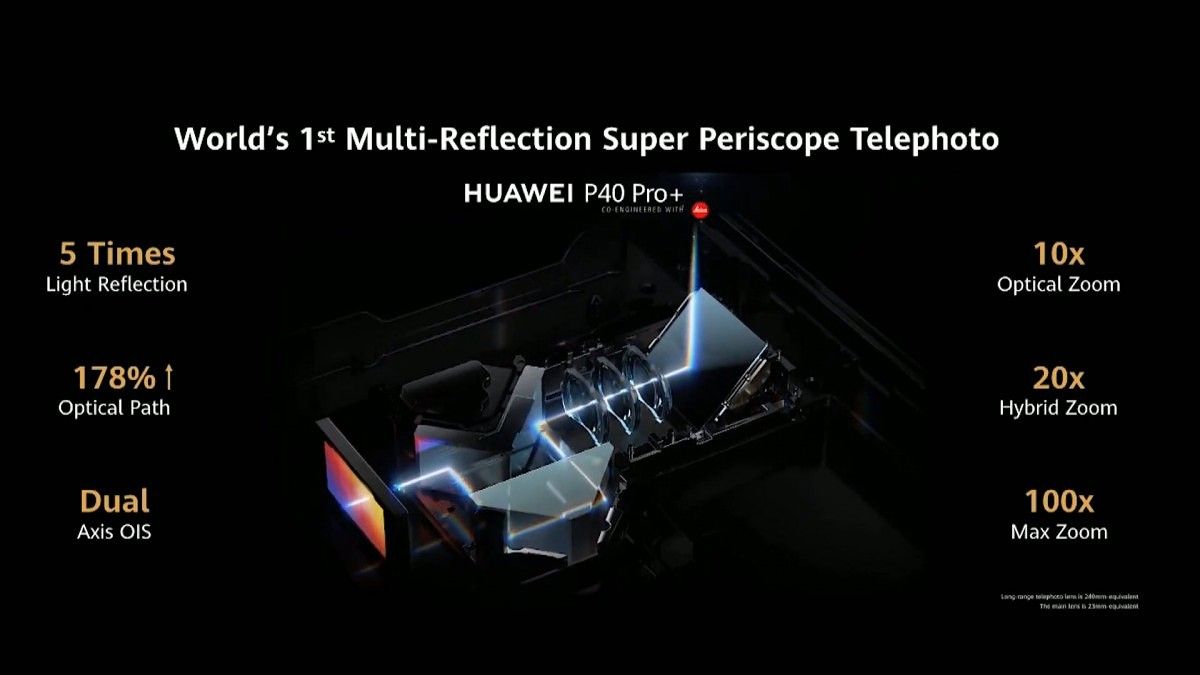
Speaking of zoom, the P40 series has plenty of abilities when it comes to zoom. The standard P40 can do 3X optical zoom, which is good for portraits. The P40 Pro can do 5X optical zoom with the SuperSensing SuperZoom Lens. The P40 Pro+ has short-range, mid-range, and long-range versatility. It can do 3X optical zoom and 10X optical zoom, plus it claims to smoothly transition between them.
All three devices have a 32MP camera on the front, but the Pro and Pro+ also have an IR depth sensor. In addition to the 50MP main camera, the P40 Pro has a 40MP wide-angle camera, 5MP telephoto lens, and a TOF lens. The P40 Pro+ has, in addition to the main 50MP and 40MP wide-angle cameras, dual 8MP telephoto lens, and a TOF lens.
While the hardware is impressive, it combines with the software to yield much more versatility and function. On the Huawei P40 series, you can take studio-like shots regardless of complexities in the lighting thanks to Multi-Spectrum Color Temperature Sensor with AI AWB Algorithm. The Golden Snap Moment feature takes multiple shots before and the shutter button is pressed and presents you with the three best shots to save; while such a feature has been around on other phones for a while, the presence of this feature on the P40 series is impressive because of the newer camera hardware. The software also enables neat editing tricks such as eliminating photobombing passerby from the image and eliminate reflections when shooting across glass. There’s a Handheld Super Night Mode onboard too.
For video recording, the devices are capable of a fair few things. You can shoot in HDR, 4K 60fps, 4K timelapse, 7680fps super slow motion, super-steady telephoto video recording with OIS plus AIS. The phones are also capable of audio zoom thanks to the 3 stereo microphones. Of course, there is Pro Mode on the camera too for video recording.

Let’s talk about performance. The P40 series is equipped with the Kirin 990 5G SoC, which includes the 16-core Mali-G76 GPU. The P40 Pro+ has a 4 layer SuperCool system, 3D graphene film, and a super-thin Vapor Chamber cooling system. The P40 has a 3,800mAh battery, while the P40 Pro and Pro+ have 4,200mAh batteries. All three have 40W wired charging, while the Pro and Pro+ also have 40W wireless charging with the Huawei charging pad.
The Huawei P40 series comes with the company’s EMUI skin, which in this case is EMUI 10.1 based on Android 10. Huawei is including a new preloaded app called “MeeTime.” This is a video/audio calling app similar to FaceTime and Google Duo. It claims to have the best resolution in poor network bandwidth situations. Some of the other features include background changing, screen sharing, and tablet support.
Google apps are obviously a big topic with Huawei devices and the P40 does not include them. Huawei has 3,000 engineers working on HMS Core (Huawei Mobile Services) development. They partnered with Qwant for Search in Europe. Huawei also has its alternative to Instant Apps called “Huawei Quick App.”
Huawei also has its own Voice Assistant on EMUI 10.1 on the P40 series, called Celia. You can summon the voice assistant with the command “Hey Celia”, or by holding the power button for a second. Celia can help you with regular daily tasks, such as initiating phone calls and texts, setting up calendar appointments and reminders, start voice recording, translate sentences, play music, videos, toggle device settings and flashlight, and of course, search for information such as sports, weather, and more. Celia is compatible with HiVision AI Lens and AI touch-shopping. Celia will be available in UK, France, Spain, Chile, Mexico, and Colombia in languages such as English (UK), French, and Spanish.
The post Huawei P40, P40 Pro, and P40 Pro+ announced with the 5G Kirin 990, 50MP RYYB camera sensor, and Huawei Mobile Services appeared first on xda-developers.
The ripples of COVID-19 pandemic – informally known as Coronavirus – have brought almost the entire world to a halt. In these hard times when you’re forced to quarantine and stay at home, your phone might be your only physically close friend. But if you break it, there’s only so little that you can do to fix it. Fortunately enough, several smartphone brands including OnePlus, Huawei, Honor, and Realme are extending warranties on their devices for up to three more months and also offering taking relief measures to ensure smoother repairs during COVID-19-related lockdowns announced by governments worldwide.
To start with OnePlus, the company will be extending warranties till May 31st for devices with warranty ending between March 1st and May 30th. Besides warranty adjustment, OnePlus has also extended the replacement period from 15 days to 30 days. The existing 30-day replacement period in the UK remains unchanged.
OnePlus is offering ship-in repairs in North America and Europe with free shipping on both sides. In addition, the walk-in repair center in Helsinki, Finland, is still open until further notice. Repair services are not available in India due to the complete lockdown enforced by the central government as a preventive measure against the spread of COVID-19.
In addition, OnePlus is also working towards a backup device program. It will soon start providing you with a backup phone while your primary device goes in for repair so that you don’t need to arrange a phone yourself. The service will soon be introduced in North America and Europe on a pilot basis.
Huawei, which is set to launch the Huawei P40 Pro later today, is also pushing the warranty further till June 30th due to COVID-19. This is applicable to devices for which the warranty expires – or has already expired – between March 21st and June 21st. It is worth pointing out that the offer is only applicable in India, UAE, and South Africa. For Qatar, the warranty will be extended until May 31st only. These offers are applicable on all Huawei products including smartphones, MateBook laptops, accessories, etc.
We’re here to support you! As a gesture of good faith, we have extended the warranty on all smartphones, smartwatches, headsets, chargers, etc. to 30th June’2020, whose warranty expires between 21st March 2020 to 21st June 2020.#HuaweiIndia #HuaweiService #Warranty #Support pic.twitter.com/EW0IOhWRpK
— Huawei India (@HuaweiIndia) March 25, 2020
In India, Huawei is also offering doorstep repair services for the Huawei Watch GT and Watch GT2. More importantly, if your watch is still under warranty, Huawei will replace it instead of repairing it. If your watch is out of warranty, Huawei will repair the watch by swapping out dead parts like strap, screen, and motherboard, strap, etc. with new ones.
More recently, Realme India also announced that it will be extending warranties till May 31st on warranties initially ending between March 20th and April 30th following COVID-19 lockdown in the country. Additionally, for purchases between March 15th and April 30th, the replacement period has been extended to 30 days. The company recently postponed the launch of the new Realme Narzo 10 and 10A due to the same lockdown.
Few supportive steps for all our users during this tough period:
-Extended warranty till 31st May for those whose warranty expires between 20th Mar- 30th Apr ’20
-Extended Replacement period to 30 days for those who purchased our devices between 15th Mar- 30th Apr ’20#StayStrong pic.twitter.com/uHlkkRZPQw— realme (@realmemobiles) March 26, 2020
Realme Europe has also extended the refund and replacement periods to two months from the original replacement deadline.
Just like Huawei, sub-brand Honor is also extending warranties in India due to COVID-19. For warranties expiring between March 21st and June 21st, the warranty deadline has been extended to June 30th. Complying with India’s 21-day lockdown, which ends on April 14th, all the Huawei and Honor service centers will be closed in India.
Featured image: Pexels/CDC
The post OnePlus, Huawei, Honor, and Realme extend smartphone warranties, and more due to COVID-19 appeared first on xda-developers.
Google Photos is arguably one of the best Google apps in recent times and it shows off what machine learning can do for the end-user in an experiential and tangible form. By allowing users to back up all their photos for free, Google incentivized a large bunch of Android users to use the service. It then applied machine learning magic to intelligently organize these photos, based not only on location and time, but also based on the people in the photo. Features like Memories serve to send you on nostalgia trips by showing you some of your best moments from the past. Users in certain geographical locations can also order same day prints, granting more permanence and visibility to these moments. In the latest version of Google Photos, Google is now working towards making it easier to order these prints, as well as to expand the scope of the Memories feature.
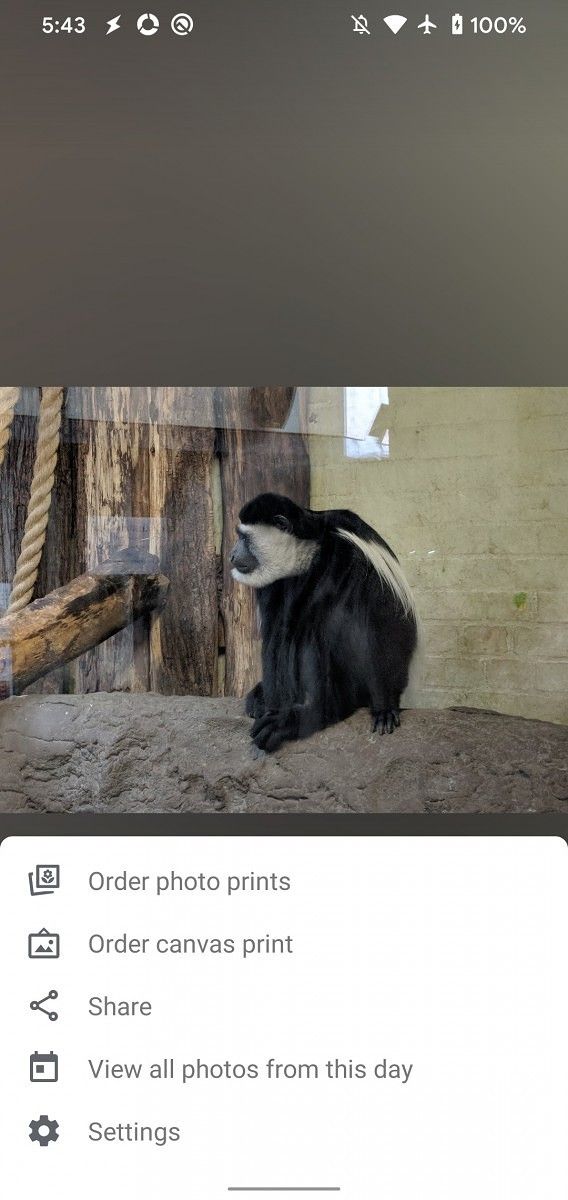
In Google Photos v4.45, which is already rolling out on the Google Play Store, there exists a new view for the Memories feature. When enabled, it moves the menu and share buttons to the bottom of the screen. It also adds new options to the menu, such as “Order photo prints” and “Order canvas print”, in addition to “Settings” for Memories and “View all photos from this day”.

There are more features to discover within the app, as these new strings suggest new settings for Memories:
<string name="photos_memories_settings_previous_years_type_description">Photos from this week in previous years</string>
<string name="photos_memories_settings_previous_years_type_title">Previous years</string>
<string name="photos_memories_settings_recent_highlight_type_description">Photos from recent weeks</string>
<string name="photos_memories_settings_recent_highlight_type_title">Recent highlights</string>
<string name="photos_memories_settings_types_settings">Types of memories</string>
<string name="photos_memories_settings_types_summary">Select the types of memories you want to see. The memories carousel above the photo grid only appears when at least one memory type is selected.</string>
<string name="photos_memories_settings_types_title">Memory types</string>
These strings suggest that users will be able to choose which moments will be displayed within memories, ranging from “Previous years” to “Recent highlights”.
We also spotted a string that suggests that some upcoming editing features may be reserved for Google One subscribers as a premium feature:
<string name="photos_photoeditor_adjustments_premium_feature_badge">Google one feature</string>It is unknown what editing feature this is referring to, at this stage.
Thanks to PNF Software for providing us a license to use JEB Decompiler, a professional-grade reverse engineering tool for Android applications.
The post Google Photos 4.45 tests ordering photo prints in Memories view, hints at premium editing features for Google One subscribers, more appeared first on xda-developers.
Leaks about the OnePlus 8 series started pouring in just weeks after the OnePlus 7T’s launch. Thanks to the digital renders shared by reliable leaker who is better known by their alias – OnLeaks – we have a wholesome notion about what these phones might look like. Now as we move closer to the purported launch date, a leak by another truster leaker, Ishan Agarwal, suggests the OnePlus 8 and OnePlus 8 Pro’s tentative specifications.
The OnePlus 8 is almost identical to the 7T in terms of internal hardware – save the upgraded Qualcomm Snapdragon 865 SoC, which isn’t exactly unexpected information. The OnePlus 8 Pro, on the other hand, comes with some significant upgrades to the display, RAM, and cameras. Further, for the first time, a OnePlus device is IP-rated and this suggests that the company might finally be looking to invade the territory of flagships from companies like Apple and Samsung.
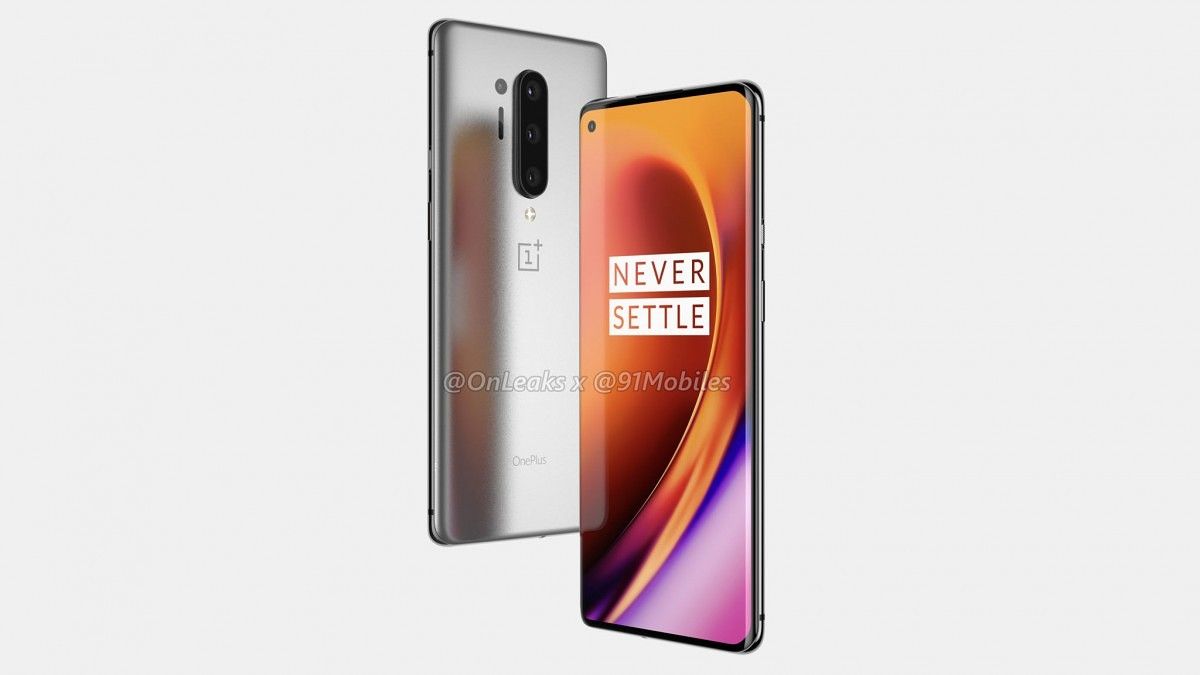
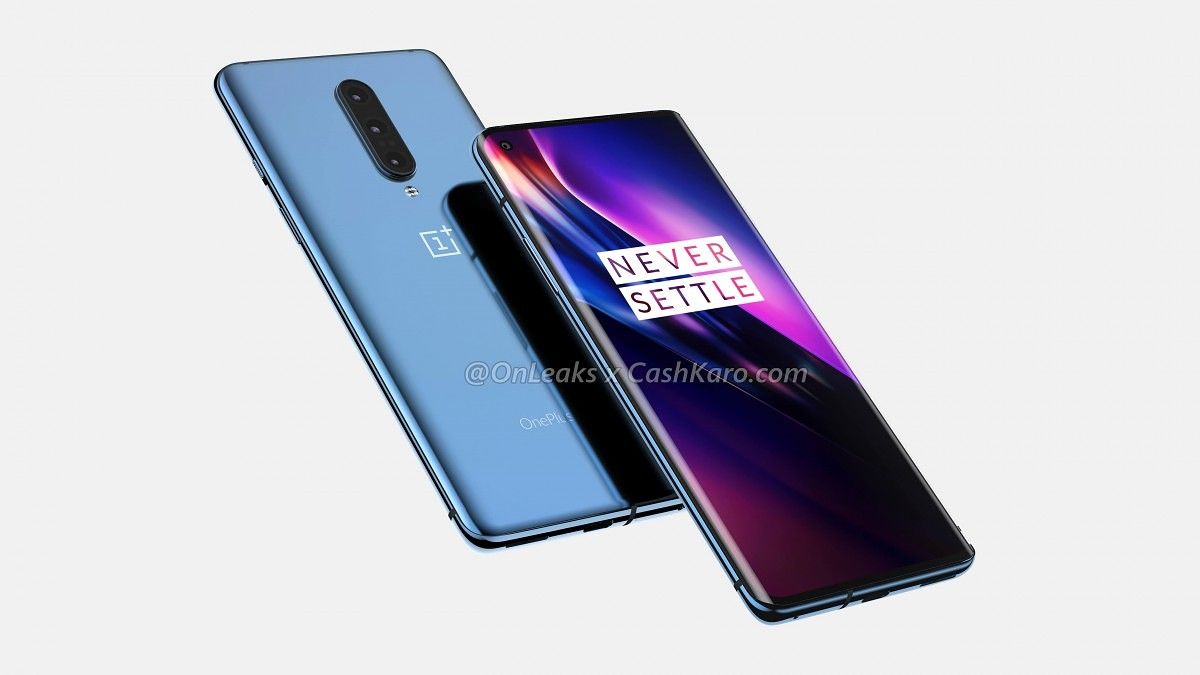
OnePlus 8 Pro (left) and OnePlus 8 (right) leaked renders
To begin with, the OnePlus 8 Pro now features a 6.78-inch QHD+ AMOLED display. As hinted by the previous leaks, this will have a single hole-punch cutout at the top left corner. This display will also come with a higher refresh rate than its predecessor and the 120Hz refresh rate has already been officially confirmed. To enable smoother video playback, the phone is also likely to feature a dedicated chip for MEMC (Motion Estimation, Motion Compensation) frame insertion technique for adding frames in between and upscaling videos to 120fps. While the addition isn’t really surprising, it places the OnePlus 8 Pro much closer in competition with the recently launched Samsung Galaxy S20 series, which also features 120Hz displays.

The OnePlus 8 Pro will be equipped with 8GB or 12GB LPDDR5 RAM alongside the Snapdragon 865. In terms of storage, however, OnePlus might not upgrade to UFS 3.1 and stick to the older UFS 3.0 NAND storages for both the devices. The two devices will also get an upgrade in terms of battery. While the OnePlus 8 Pro features a 4510mAh battery, the OnePlus 8 gets a 4300mAh battery.
Wireless charging support for the OnePlus flagship was already anticipated when the company joined the Wireless Consortium. But now we also learn that the OnePlus 8 Pro could feature 30W wireless fast charging along with 30W wired charging. The 30W fast wireless charging technology may be borrowed from sister company OPPO, which has already developed a commercial solution. Furthermore, it will also support 3W reverse wireless charging, indicating that the company might also be working on an accessory to benefit from the same.

The OnePlus 8 Pro gets another major upgrade in terms of the rear cameras. The phone’s quad-camera setup includes not just one but two 48MP cameras. While their purpose isn’t confirmed, we can expect one of these to be the primary and the other 48MP camera to be an ultra-wide unit if OnePlus takes the same route that OPPO took with the Find X2 Pro. The phone could also come with an 8MP tertiary camera, which is likely to be the same 3X telephoto setup as the OnePlus 7T Pro. Lastly, a fourth 5MP camera is expected to be part of this setup and that could either be a macro camera or a depth sensor. We’re not quite sure if OnePlus uses the electrochromic glass technology from the Concept One prototype device which it showcased earlier this year at CES 2020.
Lastly, the OnePlus 8 Pro is suggested to come with an IP68 rating for dust and water resistance. There are three likely color variants of the smartphone and those will be Black, Green, and lastly, Glow, which seems to be the mirror finish variant that has been leaked already in renders.
| Specification | OnePlus 8 | OnePlus 8 Pro |
|---|---|---|
| Display | 6.55″ Full HD+ 90Hz Super AMOLED |
|
| SoC | Qualcomm Snapdragon 865 | Qualcomm Snapdragon 865 |
| RAM & Storage |
|
|
| Battery and Charging |
|
|
| Rear Camera |
|
|
| Front Camera | 16MP | 16MP |
| IP Rating | NA | IP68 |
We will keep you updated with all the new information that we keep on learning about the upcoming flagship. Meanwhile, if you’re lucky enough, you can also win a chance to review the OnePlus 8 or 8 Pro even before its launch.
We would love to know your opinions on the same, please tell us in the comments below.
Source: Twitter/ Ishan Agarwal
Image credits: OnLeaks & 91Mobiles
The post Alleged OnePlus 8 Pro specifications leak reveal 120Hz display, 30W wireless charging, and IP68 rating appeared first on xda-developers.
Xiaomi originally spun off Redmi as an independent brand to focus on the budget segment. However, they are already vying for a share in the flagship segment, thanks to the recently launched Redmi K30 Pro (code-name “lmi”) and Redmi K30 Pro Zoom Edition (code-name “lmipro”). We even stumbled upon the names of the phone duo quite a while before the official launch event in China. We have now discovered evidence that the Redmi K30 Pro will launch in India, possibly under the POCO brand. We still don’t know if it’ll be called the POCO F2 necessarily, but since the Redmi K30 Pro is a flagship smartphone with the Qualcomm Snapdragon 865, it’s a likely possibility.
Thanks to XDA Junior Member kacskrz for first finding these hints in the MIUI 11 code. He shared his findings with us and we confirmed that all of the code and files he found are indeed present in the latest MIUI Camera app. Note that the MIUI Camera app is fairly obfuscated, so the method names we will mention below are likely not the true names of the methods.
It all started with decompiling the latest version of the MIUI Camera app in the latest MIUI 11 beta. We discovered a new method called Bi that returns true if b.kb and Build.IS_INTERNATIONAL_BUILD return true.

Digging a bit into b.kb, we have found that it returns true if the model name matches either “lmi” or “lmiin.”

“lmi’, as mentioned previously, is the code-name for the Redmi K30 Pro. Presumably, “lmiin” will be the code-name for the Indian variant of the Redmi K30 Pro, as “in” at the end of Xiaomi’s device code-names tend to signify this.
The method Bi is called in another method called getCustomWatermarkDefault, where the string identified by the hexadecimal value 0x7F1000FF is also called.

0x7F1000FF corresponds to a constant named device_poco_watermark_default_text, which contains the string “SHOT ON POCO Phone”.


Thus, the device code-named “lmiin”, which we anticipate to be the Indian version of the Redmi K30 Pro, is expected to display the watermark “SHOT ON POCO PHONE”. This tells us the Redmi K30 Pro may have POCO-branding when it is sold in India. This is ultimately not surprising since the Redmi K30 4G was rebranded as the POCO X2 in India. We would hope that the true successor to the legendary POCO F1 (review) will feature a flagship SoC from Qualcomm, and it looks like that is about to happen.
Here are the specifications of the Chinese Redmi K30 Pro in case you’re wondering what to expect from the POCO F2:
| Specification | Redmi K30 Pro |
|---|---|
| Dimensions and Weight |
|
| Display |
|
| SoC | Qualcomm Snapdragon 865:
Adreno 650 |
| RAM and Storage |
|
| Battery & Charging |
|
| Rear Camera | Photo:
Video:
|
| Front Camera | 20MP |
| Other Features |
|
| Android Version | MIUI 11 based on Android 10 |
Thanks to PNF Software for providing us a license to use JEB Decompiler, a professional-grade reverse engineering tool for Android applications.
The post MIUI Camera code suggests the Redmi K30 Pro may launch in India under the POCO brand appeared first on xda-developers.
Despite all the changes that Motorola has gone through, one aspect where the brand has continued to excel in is that their devices are suitable for custom ROM and kernel development. If you can’t get an update anymore from Motorola, then there’s a chance there may be a custom ROM for your phone on our forums. Motorola is generally good at releasing kernel source code for all the updates they put out, even if they may take some time to do so. The company has recently released the kernel source code for the Motorola One Zoom, and they’ve also released the kernel source code corresponding to the Motorola Moto G7 Plus’ Android 10 update.
The Motorola One Zoom (code-named “parker”) was announced 6 months back with features like 3x optical zoom, a Qualcomm Snapdragon 675 processor, quad cameras with a 48MP primary sensor, and more. This release corresponds to the phone’s current Android 9 Pie software, as the phone does not, as of yet, have an Android 10 update available.
Motorola One Zoom Kernel Sources | Motorola One Zoom XDA Forum
Next, the kernel source code for the Android 10 update of the Motorola Moto G7 Plus (code-named “lake”) is now available. Stable Android 10 began rolling out for the device since late January, and it is good to see that ROM and kernel developers can now work with the latest sources. Oddly, the kernel source code recently released for the device roughly 3 days ago were for the Android Pie release. We can excuse Motorola for this delay, though, since no company can currently work at full capacity due to the ongoing COVID-19 pandemic.
Motorola Moto G7 Plus Android 10 Kernel Sources | Moto G7 Plus XDA Forum
We hope that the release of updated kernel source code for both devices can boost development and we can see TWRP, custom ROMs, and kernels arise soon.
The post Kernel sources available for Motorola One Zoom and Android 10 update of Moto G7 Plus appeared first on xda-developers.
