LightBlog

mercredi 9 novembre 2016

Google Home first impressions: It’ll get better

Google has been on a mission to make its way into the living room for years. The Nexus Q, Google's futuristic digital media player from 2012, was perhaps the company's first big push into the connected home space, though the device never actually made it to market before getting discontinued. Then in 2013, Google debuted the Chromecast – a small, affordable media streamer that's become one of the most popular Google-branded products to date. But with the debut of the Google Home connected speaker, the search giant is trying something a bit different.

Google Home is meant to be a jack-of-all-trades device. You can speak to it, ask it questions, tell it to add things to your grocery list, play music through it, and even tell it to turn off the lights. It can even talk to your Chromecast, Nest Thermostat and a few other IoT devices to make your life a bit easier.

But is this a device you actually need? We've been using Google Home for a few days now, and there are some things you should know before running out and buying one right away. Here are our first impressions on the new Google Home.

Related:

How to set up and use Google Home

2 days ago

Build quality is great, for what it's worth

google-home-first-impressions-aa-7

google-home-first-impressions-aa-7

You probably won't be carrying around your Google Home too often, but it's worth noting Google's new smart speaker is very well built. Yes, it's made mostly of plastic, and it may look a little like an air freshener, but it blends in quite well no matter which room of the house it's in. It doesn't really look like a speaker, either, especially compared to its biggest competitor, the Amazon Echo.

If you're not a fan of the default White Slate model (the one we're reviewing), Google has a variety of base color options to choose from at the Google Store.

See also:

More Google Home base colors now available starting at $20

2 days ago

Sound quality is actually pretty good

google-home-first-impressions-aa-3

google-home-first-impressions-aa-3

Google Home is a connected speaker, after all, so sound quality better be good. And from what we've experienced thus far, it's very good.

Google Home has a total of four speakers, which can be found under the detachable speaker grill. Overall, when it comes to playing music or listening to podcasts, sound quality is actually really good. The speakers provide low bass and clear highs, and we haven't really experienced any major downfalls in the overall quality of sound.

Perhaps the only thing you should watch out for is turning the volume up too high. The sound starts to crackle quite a bit when the volume is turned up to max, but thankfully it has to get pretty high before this becomes a noticeable problem.

App support is limited, but Google Assistant helps make up for it

google-home-first-impressions-aa-14

google-home-first-impressions-aa-14

As of right now, Google Home only supports a handful of apps, and only about half of them are from third parties. Google Play Music, YouTube Music, Keep, Calendar and YouTube are all supported, and so are a handful of other third-party services like Spotify, Pandora and TuneIn. But just because an app is compatible with Google Assistant, that doesn't mean you get all the functionality out of that app that you'd expect.

Just because an app is compatible with Google Assistant, that doesn't mean you get all the functionality you'd expect.

Take Google Calendar, for instance. You can ask Google Assistant to give you a daily briefing based on the events in your calendar, but you can't actually add calendar events to your schedule using your voice, nor can you set reminders. If you think about it, this makes sense; you don't want everyone in your house adding random things to your calendar whenever they feel like it. We understand why this functionality isn't put in place yet, but it's still unfortunate that Google couldn't get this figured out before launch.

We would have really liked to see Google's own services be integrated a little better. Google Assistant is only able to add items to your shopping list in Google Keep, and asking what podcasts are available in Play Music is like pulling teeth, for instance.

ifttt-google-assistant-copy

ifttt-google-assistant-copy

If you have a favorite app that's not supported yet, though, you may be in luck – Google Assistant is also compatible with IFTTT, which means even though third-party app support is pretty scarce at the moment, IFTTT might be able to help bridge that gap. For instance, Twitter doesn't have Google Assistant support yet. However, you can still ask Google Assistant to post something to Twitter, as long as you have IFTTT set up. The same thing goes for other apps – want to add a task to Todoist? Just set it up in IFTTT, and Google Assistant will be able to add tasks whenever you ask it to.

For a full list of IFTTT channels compatible with Google Assistant, head here.

Related:

Which apps have Google Home support?

October 8, 2016

What really makes Google Home interesting is the handful of smart home apps and services that work with it

What really makes Google Home interesting is the handful of smart home apps and services that work with it. You can control your Nest Thermostat, Chromecast, Philips Hue lights or Samsung SmartThings devices all from your Google Home. Out of this list, most people are probably going to be using Google Home in conjunction with a Chromecast device, since smart thermostats and lightbulbs are still sort of niche products. Telling your Google Home to play a YouTube video on your living room Chromecast sounds really cool in theory, but it's sort of weird in practice at the moment. You basically need to know the name of the YouTube video you'd like to watch before you ask your Google Home to cast it, which isn't really the way people watch videos on the internet. We suppose it could be useful to ask Google Home "Play the latest video from Android Authority on my Chromecast", but for basically anything else, you'll want to just pull out your phone and cast it that way.

google-home-first-impressions-aa-5

google-home-first-impressions-aa-5

While app support isn't quite there yet, Google Assistant helps make up for it. We've particularly taken a liking to the My Day feature, which will walk you through the current weather conditions, work commute, your next meeting, your reminders and daily news.

But the fact that you have Google's powerful Assistant on board is one of the best parts about this device. It's conversational, meaning you can talk to it, and it feels like there's actually someone on the other end talking back to you. It can do cutesy things like tell jokes and read you poems, but it can also perform Google searches, give you sports scores, and a lot more. Plus, it can also understand the context of multiple questions. So when you ask "How tall is the Empire State Building?", you can follow that up with "Where is it located?", and Google Assistant will know you're still talking about the Empire State Building.

Multiple account support isn't here yet

google-home-first-impressions-aa-6

google-home-first-impressions-aa-6

Me: "Hey Google, do you support multiple accounts?"

Google Assistant: "Sorry, I can't help with that yet… but I'm always learning."

If you're planning on buying one Google Home unit for the whole family to use, there are a few things you should know. Google Home only supports one Google account at a time, which is extremely limiting in practice. This means that if you set up your Google Home with your personal Google account, everything you do with Google Home will be associated with that account. So, if your significant other asks "Hey Google, what's on my agenda?", Google Home will only respond with a daily briefing based on your Google account. The same goes for traffic updates, too. If someone else asks Google Home about current traffic conditions, it will respond with traffic updates based on your driving routes.

When multiple accounts are supported, Google Home will be much more useful for families

Taking things one step further, any YouTube video played through your Chromecast (via Google Home voice command) will affect your future recommendations on YouTube. Any Google searches performed through Google Home will affect future article recommendations in your Google app feed, what advertisements are shown to you on certain websites, and even how Google Assistant interacts with you on your new Pixel or Pixel XL.
Don't miss:

Google Pixel XL review: a Pixel's perspective

2 weeks ago

There is one exception – Google Home does support multiple accounts with music services, but everything else will still be tied to your personal Google account. Sure, you can blacklist certain apps and services like Google Calendar or Gmail from being accessed by Google Home, but that means you need to switch it off completely, meaning nobody can access those services.

Note: There's a handy Google Home FAQ page here if you need more details on accounts and services.

Google Home is a pretty amazing product, but there's certainly room for improvement. What if, one day, Home would be able to tell the difference between each user, and associate different accounts and services based on who's talking? That's actually touched on in Google's FAQ page:

Currently, we don't have an ability to differentiate users by different voice patterns. Here's more about data security and privacy on Google Home.

While it isn't possible with this first iteration of Google Home hardware, it's probably going to happen sometime in the future. And when it does, Google Home will be much more useful for families.


Google Home will be a great product, but right now it's just a good product. And as the list of third-party applications and services grow, so will the value Google Home brings to consumers. It might not change any lives just yet, but Google Home is a necessary step in creating a more connected home.

We'll have more nitty-gritty details for you in our full review, which will be here in a few days. But for now, tell us – have you used Google Home yet? If not, are you planning on buying one for yourself in the future? Let us know what you think in the comment section below.


from Android Authority http://www.androidauthority.com/google-home-mini-review-727297/
via IFTTT

Why program apps for Android XOR iOS when you can do both at once?

The AA Picks team is on the prowl for things we think our readers will value. If we make an affiliate partnership to reduce the costs of purchases, then we may see a share of revenue.

iphone 7 vs samsung galaxy s7 aa (7 of 13)iphone 7 vs samsung galaxy s7 aa (7 of 13)

Mobile developers – especially those who love Android – often find themselves in a frustrating situation. They want to develop their apps for both iOS and Android, but it's just so much easier to choose one or the other. And often, iOS ends up snagging the priority.

The reason is simple. For iOS you only have to design with a handful of devices in mind, but when you build apps for Android, you have to take into account the colorful and diverse array of handsets and tablets running the OS. It can be daunting.

But what if it didn't have to be this way?

What if you had an environment that let you develop for both platforms at once with only minimal adjustments?

You may have heard of React Native before, but the idea of learning a whole new system when there's already so much on your plate may have turned you off. But here are two bits of good news: it's probably way easier than you think, and you don't have to go it alone.

Meet Stephen Grider. By education and career, Stephen is an Engineering Architect based out of San Francisco. He makes his trade building complex Javascript front ends for major corporations in the area, but he soon learned that he had a knack for teaching.

We've heard it described as "putting the cookies on the bottom shelf." Stephen is adept at expressing complicated ideas in simple terms, and he eventually found himself mentoring other engineers who were embarking on fresh careers in software development.

Now Stephen has established himself as one of the leading online course instructors in the field. Indeed, his 'Complete React Native and Redux' course is the highest rated React course currently available. It sports 4.7 stars out of 860 ratings.

Right now, Stephen's React Native course has 4,157 students enrolled. Stephen is against copying and pasting code on principle, so he wants to make sure that you understand what role each individual line serves. To do this, you'll create a series of increasingly complex apps cover authentication, Redux, and even animations.

What what else will you get?

  • Create real-world native apps using React Native
  • Make truly reusable components that look great
  • Understand the terminology and concepts of Redux
  • Prototype and deploy your own applications to the Apple and Google Play Stores
  • Get up to speed with React design principles and methodologies
  • Discover mobile design patterns used by experienced engineers

The course also comes with an entire git repository with all of the course's code for your reference and use. The course is designed such that the content that you create while learning will actually prove useful in future applications that you build on your own for fun and profit.

The package comes with lifetime access to course materials so that you can work through them at your own pace. That's 161 lectures spanning 17 hours of video tutorials. Stephen assumes you have at least some basic programming knowledge and passing familiarity with Java before diving in.

Still looking for that price tag?

With good reason. These kinds of resources and content rarely come cheap. However, now is one of those rare times.

Stephen's 'Complete React Native and Redux Course' would normally cost you $95, but right now Udemy is having a site-wide sale that knocks 80% off the listed price. That means you get lifetime access to the whole kit-and-kaboodle for only $19, no promo code necessary!

Cut your workload in half. There's no need to work hard, when you can work smart. Get yourself a React Native education and start building professional apps at twice the speed!

The Complete React Native and Redux Course

Learn something else: The best of Udemy's November sale

6 days ago

Disclosure: This offer is brought to you by AA Picks. Our purpose is to highlight products or services we think you as our readers might be interested in and, if you buy them, we may get a share of the revenue. We operate independently from our advertising sales team, and we welcome your feedback and questions. Email us at aapicks@androidauthority.com.


from Android Authority http://www.androidauthority.com/learn-react-native-727683/
via IFTTT

Buy a Galaxy S7 and get another free from T-Mobile this weekend

samsung galaxy s7 review aa (7 of 20)

samsung galaxy s7 review aa (7 of 20)

If you missed out on those buy one get one free offers floating around back at the Samsung Galaxy S7's launch, you'll be in with another chance soon. This weekend, T-Mobile is offering customs a second Galaxy S7 for free, sort of, when they buy a new Samsung flagship on the carrier's Equipment Installment Plan.

I say "sort of free" because the cost of the second handset is eventually returned through 24 months worth of call credits with a qualifying line, as is usually the way with these deals. As a bit of an added bonus, T-Mobile says that customers from other carriers can use this offer in conduction with its "Carrier Freedom" promotion. This sees T-Mobile cover the costs of you switching carrier up to a value of $650 per line via trade-in credit and a prepaid Mastercard.

To quality, customers can opt for the T-Mobile ONE package, which starts at $70 per month for the first line and offers unlimited calls, texts, and 4G LTE data. Sadly, there's no mention of whether this deal applies to the Galaxy S7 edge as well, so we'll have to assume that it doesn't.

T-Mobile will be running this buy one get one free deal starting from Friday November 11th at 6:00 am PT through to Sunday November 13th at 11:59 pm PT. You can pick up your offer through T-Mobile's website or in stores nationwide.


from Android Authority http://www.androidauthority.com/t-mobile-bogof-galaxy-s7-offer-727814/
via IFTTT

Snapchat World Lenses update brings augmented reality to the messaging app

Snapchat-how-to-use-4

Snapchat-how-to-use-4

The latest Snapchat update introduces an augmented reality component known as World Lenses which, once activated, overlay digital effects into the real world.

World Lenses features seven AR effects including a simulation of snowfall, a torch animation which illuminates a scene, and something inspired by the 'puking rainbows' meme.

To make use of effects, simply switch to the rear-facing camera perspective in the Snapchat app and tap on the display: the animations will pop up in circular tiles at the bottom.

The update arrives ahead of the release of Snapchat's new AR glasses, Spectacles. The glasses, which will go on sale for $129.99, can connect to Snapchat and record short videos through an 115-degree lens. Support for Spectacles was also added in the latest Snapchat update.

You can download Snapchat for free in the Google Play Store and let us know how you like the new effects in the comments.


from Android Authority http://www.androidauthority.com/snapchat-world-lenses-augmented-reality-727808/
via IFTTT

Samsung is still working on that foldable smartphone

samsung-galaxy-x-patent-04-720x368

samsung-galaxy-x-patent-04-720x368

Samsung has reportedly been working on a foldable smartphone for many years now, and it seems that the company is still refreshing its ideas. A new batch of renders for a patent application published earlier today give us perhaps our best look yet at how such a folding smartphone might work.

The selection of images show a central hinge point that is located half way along the phone's display. This then allows the phone to bend slightly, making it a more ergonomic fit in the hand and which may be especially convenient for phone calls. This hinge can be extended further still to essentially fold the phone in half for easy portability. Although the two displays don't appear to rest flat against each other when closed.

Unfortunately, as this is a patent application there's no indication that such a design is going to appear in a consumer smartphone any time soon. Although Samsung has previously suggested that flexible handsets aren't that far away, and whisperings point to a possible unveiling of the company's first bendable smartphone at MWC 2017. Samsung isn't the only company working on bendable phones though, we've already gone hands on with Lenovo's concept handset.

See also:

Lenovo foldable smartphone and tablet concept hands on

June 10, 2016

It's seems very unlikely that this design is in anyway related to next year's Galaxy S8 flagship, as Samsung won't risk alienating existing fans with an entirely new design. Instead, we're probably looking at a limited concept Galaxy release more along the lines of the LG G Flex, if this or a similar design ever actually ends up coming to the market.

A foldable smartphone from Samsung would certainly be an exciting new announcement, but it remains to be seen if it would be a market game changer. What do you think about the design?


from Android Authority http://www.androidauthority.com/samsung-foldable-smartphone-patent-727784/
via IFTTT

Football Manager Touch 2017 slides into the Google Play Store

football_manager_touch_2017_row_screenshots_12x

football_manager_touch_2017_row_screenshots_12x

The 2017 edition of Football Manager Touch has landed in the Play Store. The sports management sim, known for its tactical depth and divorce case citations, is back for another year to try and take over your life.

Developed by Sports Interactive and published by SEGA, Football Manager Touch 2017 sees you take control of a real-world soccer team to guide them to championship glory. It features hundreds of leagues, thousands of players, and a 3D match engine to monitor each players' performance.

See also:

The Humble Mobile Board Game Bundle delivers 8 games for $5

1 day ago

FM Touch 2017 includes a host of improvements upon FM Touch 2016, many of which echo adjustments made to its PC counterpart, and one of Sports Interactive's main aims appears to have been speeding up the gameplay: there's now an "instant result" feature so you can skip to the end of matches when you feel you've seen enough of them, there are more automation options for backroom staff, and scout assignments have been streamlined.

Here's a video discussing the new features:

Football Manager 2017 Touch is available now in the Play Store for compatible tablets. Oh, and it costs $19.99 with in-app purchases.

Are you going to pick this one up? Let us know in the comments.


from Android Authority http://www.androidauthority.com/football-manager-touch-2017-released-727783/
via IFTTT

Google clarifies requirements for Daydream VR-ready phones

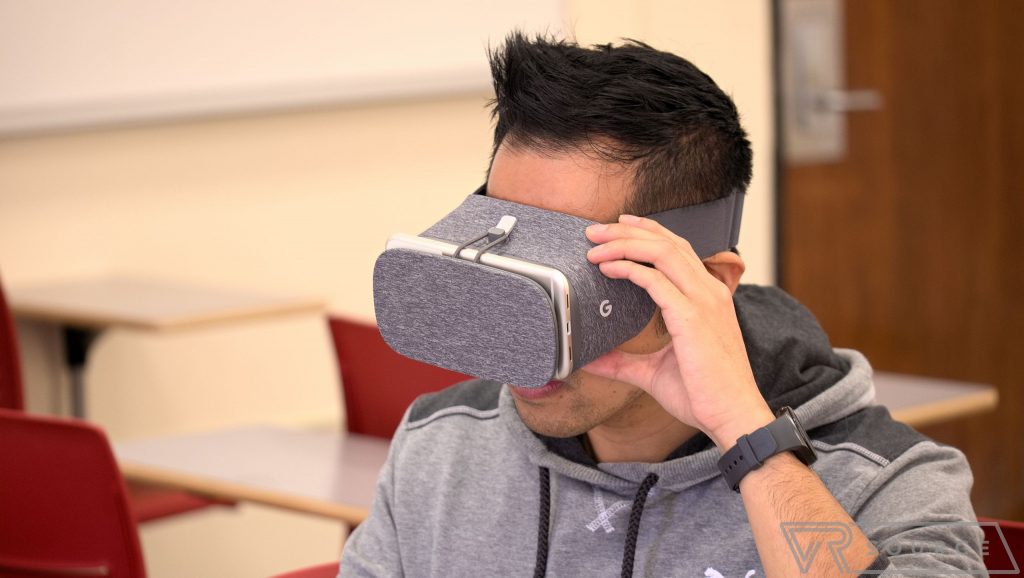
google-daydream-view-review-24-of-28

google-daydream-view-review-24-of-28

We finally know what Daydream VR-ready actually means.

Google recently updated the Android Compatibility Definition Document (CDD) for Android 7.0 Nougat. There are quite a few interesting changes, including some that point to consistent in-line controls for headphones, tweaks to the Android update model, and a potential ban of third-party charging standards.

Don't miss: Daydream VR: everything you need to know

Another provision of the document finally lays out the requirements that a smartphone must meet in order to be deemed Daydream VR-ready. While highly technical, these specifications give us an idea of what devices will work with Google's new mobile VR standard.

Daydream VR-ready phones:

  • MUST have at least 2 physical cores.
  • MUST support sustained performance mode.
  • MUST support Vulkan Hardware Level 0 and SHOULD support Vulkan Hardware Level 1.
  • MUST support H.264 decoding at least 3840 x 2160 @ 30fps-40Mbps.
  • MUST support HEVC and VP9, MUST be capable to decode at least 1920 x 1080 @ 30 fps-10Mbps and SHOULD be capable to decode 3840 x 2160 @ 30fps-20Mbps (equivalent to 4 instances of 1920 x 1080 @ 30fps-5Mbps).
  • STRONGLY RECOMMENDED to support android.hardware.sensor.hifi_sensors feature and MUST meet the gyroscope, accelerometer, and magnetometer related requirements for android.hardware.hifi_sensors
  • MUST have an embedded screen, and its resolution MUST be at least be Full HD (1080p) and STRONGLY RECOMMENDED to be Quad HD (1440p) or higher
  • MUST measure between 4.7″ and 6″ diagonal
  • MUST update at least 60 Hz while in VR Mode
  • The display latency on Gray-to-Gray, White-to-Black, and Black-to-White switching time MUST be ≤ 3 ms
  • The display MUST support a low-persistence mode with ≤5 ms persistence
  • Device implementations MUST support Bluetooth 4.2 and Bluetooth LE Data Length Extension.

The full list of requirements is available here. A quick note on verbiage: "MUST" means that the requirement is mandatory, while "STRONGLY RECOMMENDED" and "SHOULD" mean that Google allows manufacturers to go against its recommendations.

The situation is a bit fuzzy when it comes to the processor requirements. While ZTE announced this summer that the Axon 7 (powered by Qualcomm Snapdragon 820) is Daydream VR ready, Qualcomm later stated that only Snapdragon 821 supports Daydream VR. Vulkan 1.0 support alone doesn't guarantee compatibility, as Samsung's S7 and S7 Edge support Vulkan, but are not Daydream VR-ready as far as we know.

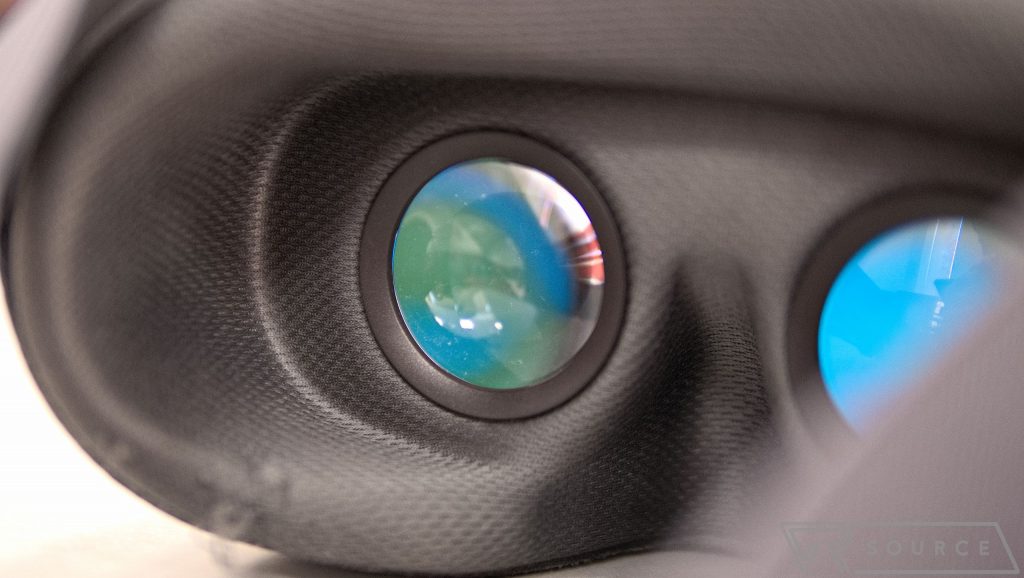
google-daydream-view-review-6-of-28

google-daydream-view-review-6-of-28

Google doesn't specifically demand an OLED display in the CDD, but the need for low latency and persistency probably means that only phones with OLED panels will make the cut. That could increase even further the demand for AMOLED displays, which is already on the rise and expected to boom in 2017. On the flipside, Full HD devices are supported, though Google would obviously prefer the denser Quad HD.

So far, if you want a Daydream VR-ready device, the safest bets are the Google Pixel and Pixel XL and the ZenFone 3 Deluxe with Snapdragon 821. There are other Snapdragon 821 devices out there, but they haven't been officially confirmed to work with Daydream VR headsets like Google's Daydream View. Speaking of that, the View will ship tomorrow, so there's a good chance that Google will shed light on the matter very soon.

This post was originally published on VRSource.com.


from Android Authority http://www.androidauthority.com/daydream-vr-ready-phones-specs-727780/
via IFTTT