This has been a great year for smartphones so far — conventional slab phones are all extremely polished, and foldables are coming into their own. So if you’re looking to upgrade your phone, now is as good a time as any. We here at XDA test almost every smartphone on earth, so here’s our expert guide on the best smartphones — covering both the best Android and best iPhone — depending on your budget or need!
Navigate this article:
Best Overall Smartphone: Apple iPhone 13 Pro
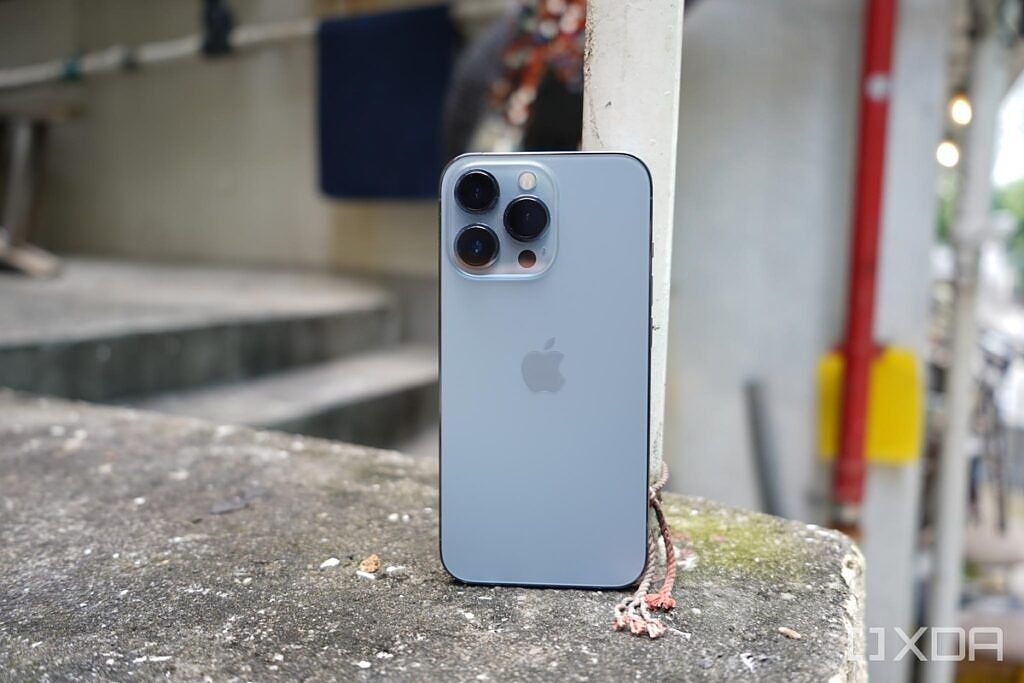
Apple’s new iPhone 13 Pro takes this top spot because it offers much improved low light cameras over previous iPhones; a game-changing Cinematic mode that lends an air of authenticity to amateur videos; the most powerful mobile processor; and a price that seems reasonable by 2022 flagship standards. It’s not well into the four-digit pricing like some of the 2021 and 2022 premium flagships.
The iPhone 13 Pro has arguably the best chipset on any phone right now. The A15 Bionic from Apple is a beast when it comes to performance so if you’re going to be doing intensive tasks on your phone like gaming or editing and rendering videos, the iPhone 13 Pro would be a perfect choice. Apart from raw performance, Apple’s hardware and software integration is unmatched. What this means is the OS is perfectly optimized to run with the hardware onboard, and this applies even for third-party apps. A lot of apps run better natively on iOS than on Android.
It’s not just about the performance though. The A15 Bionic provides a great boost in terms of battery life too. The iPhone 13 Pro can easily last you an entire day — and even more if used judiciously. Even if you’re a heavy user, you won’t find it hard to get to the end of the day without plugging the phone into a socket. And yes, this is with the new 120Hz ProMotion display. The 120Hz OLED display is a huge improvement over the older 60Hz panel on the iPhone 12 Pro and was something enthusiasts were asking for for years. Apart from the faster refresh rate, the notch up top has also shrunk by 20%.
Unlike the iPhone 12 series where the Pro Max had a hardware advantage over the standard Pro in the camera department, the iPhone 13 Pro and Pro Max are exactly the same this year except in terms of the physical size and battery life. The cameras on the iPhone 13 Pro are excellent and reliable, and they’re the best in the business when it comes to video recording. Apple has also introduced new features like Cinematic Mode that improve the overall experience of using the camera on the iPhone 13 Pro.
All of these parameters come together to make the iPhone 13 Pro an ideal candidate for the best phone you can buy. Of course, if you’re an Android fan, we’d recommend you take a look at our best Android smartphone list, but if you’re a general consumer looking for a phone that will work well, last you for years, keep its resale value, and have a strong hardware and software ecosystem around it, then look no further than the iPhone 13 Pro.
The iPhone 13 Pro is the best overall phone for most people due to its software polish, greater resale value down the line, and longer software support.
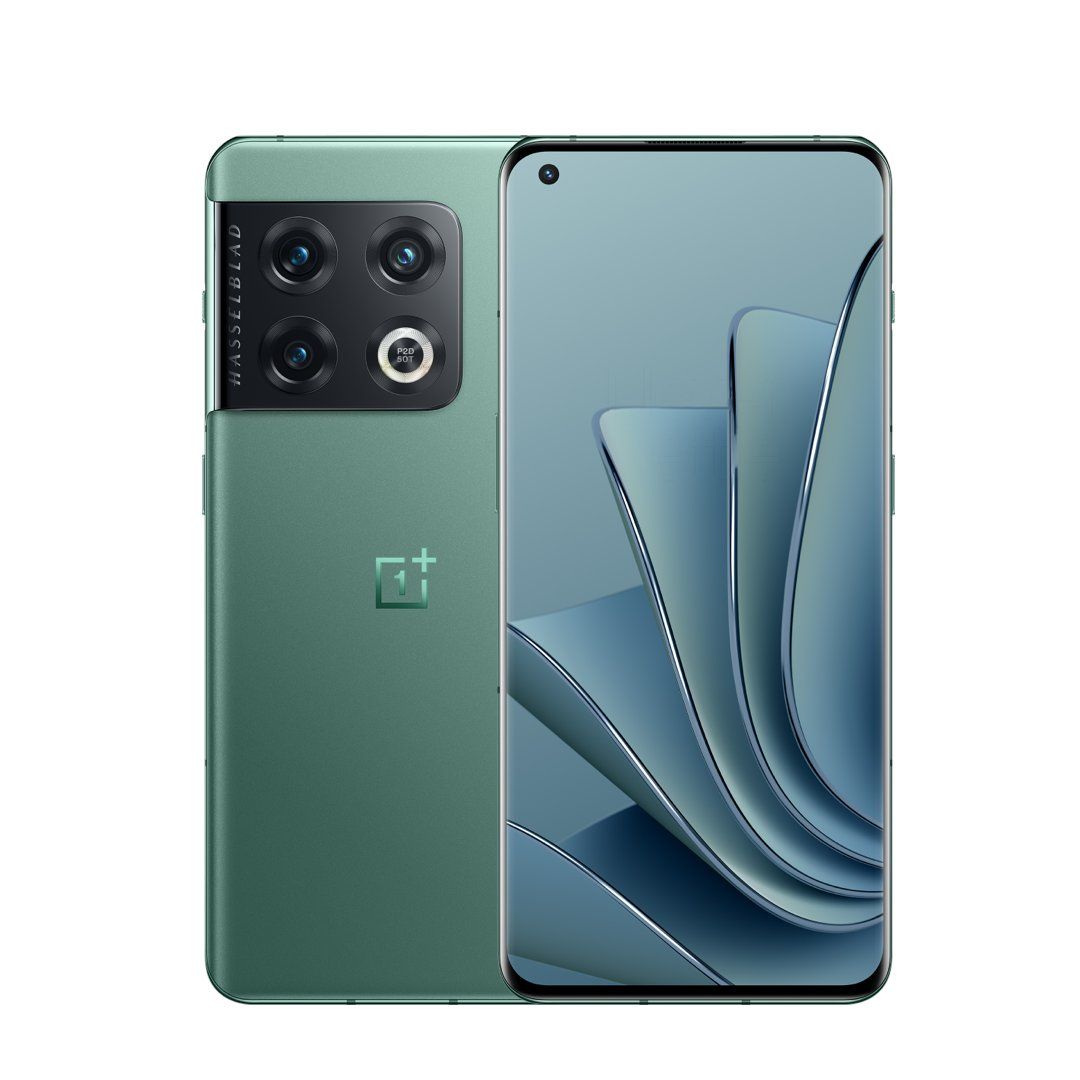
Best Affordable Premium Smartphone: OnePlus 10 Pro

This category is different from the above “best overall” category in that this is no longer looking at it from an average consumer perspective. This category is instead for people who follow the smartphone scene closely and want a phone that offers the best combination of specs, features, and value. And yes, some will surely take issue with us calling an $899 phone “affordable,” but do keep in mind this section is for an affordable premium phone, meaning it’s for someone who wants a high-end flagship phone without going too crazy, and $899 in this category is on the lower end.
Anyway, the $899 OnePlus 10 Pro is our choice in this spot. It’s got a brilliant 120Hz LTPO 2.0 OLED display that’s almost as good as the Galaxy S22 Ultra’s (it falls short in peak brightness by a hair), premium build quality, excellent haptics, and a really strong main and ultra-wide camera. In fact, the only area in which the Galaxy S22 Ultra clearly beats the OnePlus 9 Pro is in zooming prowess. But then the OnePlus 10 Pro charges much faster and costs almost $300 less.
As a standalone device, without comparing it to other phones, the OnePlus 10 Pro offers a great package. OnePlus has built its reputation over the years as a brand that focuses on being “fast” and that theme continues with the 10 Pro. The Snapdragon 8 Gen 1 is one of the best smartphone SoCs on the Android side of things so performance is top-notch. While OxygenOS has lost a bit of its own identity in the past year — it now shares a lot of DNA with OPPO’s ColorOS, it is still one of the smoothest and fastest UI around.
Apart from performance, another thing that’s really fast on the OnePlus 10 Pro is charging the battery. In the US, the OnePlus 10 Pro gets a 65W charging brick in the box (while internationally, the phone gets an 80W brick — this difference is due to regional voltage issues, but rest assured, the charging times are negligible between the two.) From our testing, the phone’s 5,000 mAh battery can charge from 0-100% in 34 minutes.
The OnePlus 10 Pro, at $899, is one of the more affordable phones with a top notch 120Hz LTPO OLED screen, Snapdragon 8 Gen 1, and a fully featured camera system.
Best Large Foldable Smartphone: Samsung Galaxy Z Fold 3

If you were interested in foldable phones before but had some concerns, the new Samsung Galaxy Z Fold 3 may change your mind. It took the already exceptional Z Fold 2 and added official water resistance, more durable materials covering the hinge and screen, and support for the S-Pen. It’s the best mobile device for multi-tasking, and Samsung somehow managed to lower the price a little bit this time too.
Foldables are a really interesting category. They’re refreshing and futuristic, and can also improve your productivity and change the way you use your smartphone. In fact, the Galaxy Z Fold 3 does exactly that. Unlike clamshell phones, the Galaxy Z Fold 3 is a phone that folds out to become a tablet, or a tablet that folds into a phone. No matter how you refer to it, it’s essentially a pocket PC that you can carry around with you to get some serious work done or enjoy consuming media like no other phone can.
The large internal display on the Galaxy Z Fold 3 is what enables you to do all of this. Samsung has also optimized its One UI software in a way that makes using the foldable a treat. Right from split-screen view to launching multiple instances of the same app side-by-side for multitasking, the Galaxy Z Fold 3 almost replicates a tiny laptop that fits into your palm. There’s even a floating dock now that stays persistent across the UI, and which can launch your favorite apps directly within another app.
All of this is handled by the Snapdragon 888 SoC which means everything you do on the phone is fast and snappy, no matter how many apps you run. The cherry on the cake this time is the support for the S Pen. A lot of Samsung users would miss the S Pen from the Note series since Samsung didn’t launch a Note series phone this year. However, the Galaxy Z Fold 3 gets support for the S Pen so you can use it to take notes, sketch, doodle, or do just about anything on the internal display.
The internal display is a 120Hz OLED panel with an under-display front camera (UDC), giving the screen an immersive look. If you game a lot on your phone or even read a lot of e-books, you can’t find a better phone than this thanks to that huge display. This year, Samsung also upgraded the outer cover display to a 120Hz panel to make things more uniform. The phone is also now IPX8 water-resistant making it one of the most durable foldables out there. The cameras on the Galaxy Z Fold 3 aren’t as good as some other phones including Samsung’s own Galaxy S21 Ultra which may be slightly disappointing to some.
With a Snapdragon 888, excellent speakers, and that large 7.6-inch screen, the Z Fold 3 is excellent for gaming or movie watching. While the cameras aren’t the best around, they’re still quite good and enough for most.
If you are curious about foldable phones, the Galaxy Z Fold 3 is the best representation of that. Premium construction quality, polished software, and solid cameras make this both a great phone and a tablet.
Best Small Foldable Phone: Samsung Galaxy Z Flip 3

Do you think current slab smartphones have become too big to fit comfortably in your pocket? If so, the Samsung Galaxy Z Flip 3 is for you. A clamshell foldable that, when folded up, can fit into the breast pocket of a jacket or a small women’s purse, the Z Flip 3 is a compact yet powerful device. It’s also one of the most affordable foldable phones that’s actually worth buying.
The Galaxy Z Flip 3 takes a different approach to foldables when compared to the Galaxy Z Fold 3. Instead of being a large tablet-sized device that folds into a smartphone, it’s a conventional phone when unfolded, with a tall display that folds in half vertically to become half the size. It’s reminiscent of flip phones that we had in the past, except this one has a foldable display that goes from edge to edge and has flagship internals.
The Snapdragon 888 is what we have inside the Galaxy Z Flip 3 which means it’s no slouch when it comes to performance. You can run all sorts of apps and games on this phone, including the most demanding titles and you won’t have any issues. This isn’t really a phone meant for gaming though. It’s more of a fashion accessory or a phone that you would want to flaunt, given it’s so unique compared to traditional candy bar phones.
The internal display on the Galaxy Z Flip 3 is an OLED display that’s as big as any other recent normal phone. It’s a 120Hz panel so you’re not really missing out on anything that you would get on other phones in this price range. There’s a hole-punch cutout for the selfie camera. Speaking of cameras, there’s a dual-camera setup on the Flip 3 which you can also use to take selfies by using the small cover display on the outside as a viewfinder. The cover display is mainly used to check the time and any pending notifications.
The one inevitable problem that plagues the Galaxy Z Flip 3 is battery life. Given the unique form factor, it’s difficult to fit in a large battery, which means most people will have to charge the phone sometime by evening if you want it to get through to the end of the day. The charging speed isn’t very fast either so that’s something to keep in mind. Other than that, the Galaxy Z Flip 3 is the foldable phone for the masses and Samsung is surely headed in the right direction.
The Z Flip 3 features a 6.7-inch 120Hz OLED display on the inside and a 1.9-inch cover display that’s ideal for quick interactions with the phone when it’s closed. And because the phone can stay open mid-fold, it’s a great hands-free video watching or video call taking device too. With IPX8 water resistance and a durable hinge, the Z Flip 3 should ease fragility concerns.
The Galaxy Z Flip 3 is perhaps the first foldable phone to go mainstream, with an attractive price tag and an eye-catching form factor that turns heads out in public. A larger outside screen means you don't always have to unfold the device to get things done -- but you'll want to unfold and see the beautiful main screen for yourself.
Best Smartphone Camera: Vivo X80 Pro
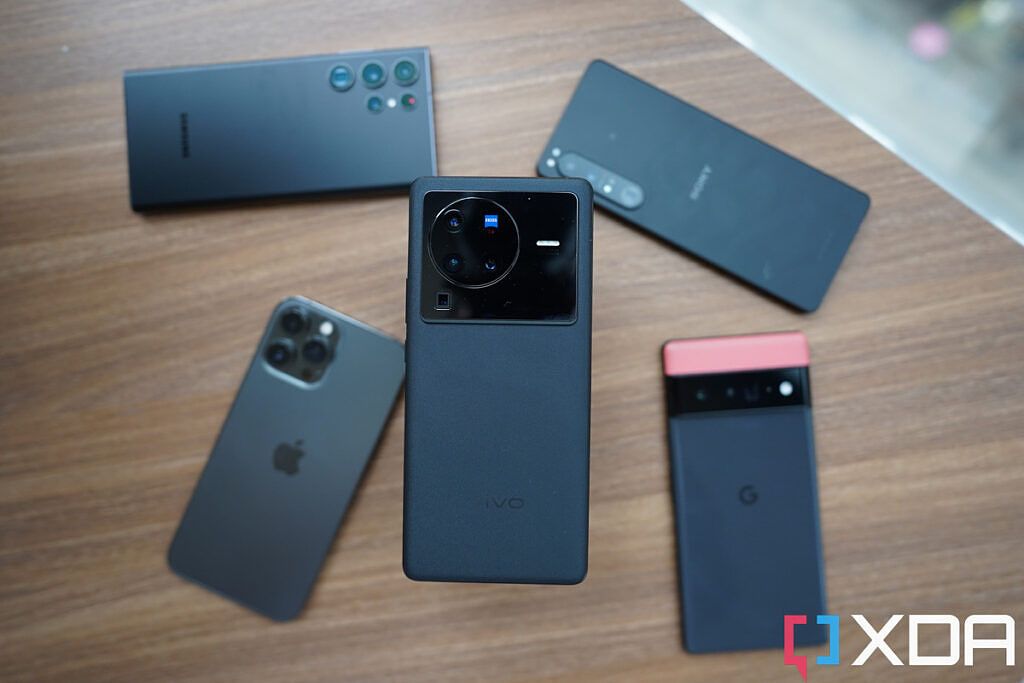
We have tested a lot of smartphone cameras over the years and while most premium flagships have really capable shooters now, the best of the best is arguably the Vivo X80 Pro. From the brand new custom-built 50MP GNV sensor that packs a large image sensor and a fast aperture to the pixel-dense 48MP ultra-wide camera, to a telephoto lens that’s balanced on top of a miniature gimbal and a Periscope zoom lens that can capture 5x lossless zoom, the Vivo X80 Pro cameras have the uncanny knack for capturing a vibrant, sharp, and properly exposed shot almost every single time. Even for shots against harsh backlight, which an iPhone or Galaxy may overexpose, the Vivo X80 Pro finds the perfect balance. You can see in the samples below where Apple and Samsung blow out some light sources, Vivo’s X80 Pro found perfect exposure. The sample size isn’t small either — we have taken hundreds of photos in various tests and this is a consistent result.


Part of this is due to the V1+ imagine chip that Vivo designed itself, which grants Vivo complete control over the image processing pipeline, unlike most Android phones that have to rely on whatever ISP Qualcomm built into the Snapdragon SoC. There’s also the Zeiss T-coating that is applied to every lens of the rear-facing system, which helps reduce glare. Then you throw in a new video portrait mode that produces somewhat convincing artificial bokeh in the video, and you have a very powerful camera system that snaps instantly Instagram-able photos almost every time.
The rest of the phone is top-notch too. There’s a Snapdragon 8 Gen 1 SoC powering a gorgeous 6.8-inch LPTO OLED display, and a stereo speaker system that pumps out full audio. The 4,700 mAh battery is not that big, but it can be fast-charged at 80W, and the charging brick comes with the package. Other flagship flourishes such as IP68 water and dust resistance and wireless charging are present. The Vivo X80 Pro is a very polished smartphone all around — but it’s the cameras that help it stand out.
The Vivo X80 Pro has our vote for the best main cameras of any smartphone right now, and the rest of the package is pretty good too.
Also great smartphone camera: Galaxy S22 Ultra

While we think the Vivo X80 Pro’s main and ultra-wide camera reaches higher heights than anyone this year, if you want the most complete and versatile camera system, then that would be the Galaxy S22 Ultra, because it packs four cameras covering the ultra-wide, wide, 3x zoom and 10x zoom focal range — the latter is the best zoom lens in smartphones by some distance, with no other phone save for the very hard to buy (and Google-less) Huawei P40 Pro Plus that can even claim to have such a focal range.
The main and ultra-wide cameras of the Galaxy S22 Ultra are no slouch either — the main lens is a 108MP shooter that uses nano-binning technology to produce a super bright image (but perhaps too bright, as it’s the same over-exposure issue that has us ranking it a hair below the Vivo X80 Pro’s main camera), and the ultra-wide camera is excellent during the day, with a sweeping 120-degree field-of-view.
The rest of the phone is absolutely premium, with a 6.8-inch Super AMOLED display with the maximum peak brightness of any phone screen this year, a Snapdragon 8 Gen 1 SoC, and a large 5,000 mAh battery. There’s also the S-Pen stylus, which has migrated over to the Galaxy S series since the Note line has been retired.
Samsung’s OneUI software is also among one of the most polished in the Android space, with a good multi-tasking system and extra features such as Samsung DeX. While we ultimately gave the “best overall” title to the iPhone 13 Pro, if you have decided iOS isn’t for you, then the Galaxy S22 Ultra is the pick for the best overall phone on this list.
The Galaxy S22 Ultra is by default the king of Android phones right now, with the widest global availability and the most complete camera system.
Best Big Phone: Apple iPhone 13 Pro Max

If you want an unapologetically big phone, then the iPhone 13 Pro Max, with a 6.8-inch screen in a boxy design, is it. The iPhone 12 Pro Max was already a very big phone, and then the iPhone 13 Pro Max one-ups it by adding a bit more thickness and weight. In return, you get a 120Hz screen and improved battery life over the previous model — two things that usually don’t go together. The iPhone 13 Pro Max also improves on the 12 Pro Max with a larger image sensor and faster ultra-wide lens for superior low light photography compared to previous iPhones.
Then there’s the A15 Bionic, which is still the best SoC in the mobile industry today. For doing intensive tasks on your phone like gaming, or editing and rendering videos, the iPhone 13 Pro Max would be a perfect choice. Apart from raw performance, Apple’s hardware and software integration are unmatched in the mobile space, which means you’re getting the best hardware and software synergy in the mobile industry, resulting in superior performance and longer battery life. And the latter is legit great — the iPhone 13 Pro Max is a phone that can finish an entire 12-hour day with well over 40-50% battery to spare. This is the rare 120Hz flagship that can last a day and a half.
But back to the cameras: with larger sensors and faster apertures, the iPhone 13 Pro Max’s main camera is the best Apple has to offer, and while the ultra-wide camera is just okay by 2022 standards, the iPhone 13 Pro Max makes up for it with arguably the best 3x telephoto zoom lens on the market. But it’ll be video recording where the iPhone 13 Pro Max really shines, as it is still one of the few phones that can switch lenses mid-filming, and sport tremendous stabilization to boot.
The iPhone 13 Pro Max is the phone to get if you want an unapologetically big smartphone. You not only get a huge screen, but the best battery life in a phone this year.
Best Small Phone: Apple iPhone 13 Mini

The iPhone 13 Mini isn’t just small — it’s tiny. It’s a phone that most people will be able to use with one hand with ease. Despite its small size, it’s still among one of the most powerful phones around, thanks to that Apple A15 Bionic chip and well-optimized iOS. Apple’s even improved on the below-par battery life of the iPhone 12 Mini for this year’s update.
The iPhone 13 Mini was a dream come true for small phone enthusiasts. Apple finally made a flagship phone with powerful, top-of-the-line internals that fit into a compact form factor that could easily fit into your denim pockets. Small phones were a thing of the past until apple resurrected the category with the iPhone 12 Mini. However, the small form factor brought along with it a big drawback — average battery life.
There’s a limit to the size of a battery you can put inside a small phone like the 12 Mini and that limit meant that the phone had sub-par battery life. The iPhone 13 Mini fixes this very problem and finally presents a strong case for a small phone to be used like any other phone in 2022. Battery life is the single biggest upgrade that the iPhone 13 Mini brings and that alone is a big win according to us. We now have a compact phone that doesn’t need to be around a charge by afternoon.
While the capacity of the battery has increased, what’s responsible for the increment in battery life is mainly the A15 Bionic chip from Apple. It’s more power-efficient than last year’s A14 Bionic while being one of the most powerful chipsets around. The iPhone 13 Mini is also a performance beast and can play the most graphic-intensive games with ease. You can also shoot and edit 4K 60fps videos directly from the phone along with the option to record videos in the new Cinematic Mode. The display, while still being stuck at 60Hz, now has a smaller notch and is slightly brighter than its predecessor.
To summarize, you get a pair of 12MP rear-facing cameras that, while not the most versatile system around, can capture awesome still photos and best-in-class videos. Starting at $799, this is also one of the cheaper iPhones around. If you love small phones, this one’s a no-brainer.
The iPhone 13 Mini is the phone to get if you want a small phone that you can easily use with one hand.
Second-Best Small Smartphone: ASUS Zenfone 8

With dimensions of 148mm x 68.5mm x 8.9mm and a weight of 169g, the ASUS Zenfone 8 isn’t quite as petite as the iPhone 13 Mini, but in the Android space, it’s still a breath of fresh air. Most adults should be able to use the phone one-handed with relative ease, as the 5.9 inch OLED screen doesn’t stretch too high up.
If you’re not a fan of the closed nature of iOS and want to feel at home with a compact Android device, you don’t really have a lot of options. The Asus Zenfone 8 is your best pick if you’re looking for a relatively small Android phone that doesn’t compromise on the internals. The Pixel 4a is another compact phone but it only has mid-range specs and is quite old at this point. The Zenfone 8 packs in probably everything you need on a modern-day smartphone.
It’s got the Snapdragon 888, which you’ve probably realized by now is the most powerful SoC on the Android side of things. What this means is you don’t have to be worried about performance on this phone. Despite being small, it’s going to perform as well as any other flagship phone and run all your favorite apps and games with ease. Asus’ software is also relatively clean and is closer to stock Android, so you don’t get a lot of bloatware or unnecessary features to keep it light.
The cameras on the device are also competitive and while they’re not as good as the iPhone 13 Mini, they should be sufficient for most people. The battery life is also quite surprisingly good, thanks to a 4,000mAh battery onboard that can last you an entire day. There’s an OLED display which means the experience while consuming content on this phone is also going to be good, although you may not want to watch long shows or movies on a small display like this.
Despite the small size, the phone packs Qualcomm’s latest Snapdragon 888 SoC with a 4,000 mAh cell and copious amount of RAM. You also have a 64MP main camera, a 12MP ultra-wide, and a headphone jack. If you are tired of big Android phones, this is the one to get.
The ASUS Zenfone 8 is the rare Android with a screen under 6-inches and weight under 180g -- and this alone may be enough to entice a chunk of Android users.
Best Affordable Flagship Smartphone: Google Pixel 6

The Pixel 6 Pro is the better phone, but the Pixel 6 is the better option for most people. Both phones basically share most of the same hardware, with the Pro only gaining a higher refresh rate and a zoom lens. For most people, those two features aren’t enough to justify the nearly $250 price. The Pixel 6 is the biggest Pixel update in years, with a new Tensor chip custom-designed by Google that takes the phone’s machine learning capabilities to another level. The display, while 90Hz, is still a looker, with FHD+ resolution and accurate color output. The dual-camera system here features the same hardware as the Pro’s — a 50MP primary sensor and a 12MP ultra-wide.
The camera on the front isn’t as wide as the one on the Pro and the 4,600 mAh battery is also a bit smaller than the Pro’s 5,000 mAh, but other than that, there’s not a lot you’re missing out on with the standard Pixel 6.
Compared to the Pixel 5, the Pixel 6 improves considerably, especially in the SoC department. The Pixel 5 was more of a mid-range phone with performance not being its strongest suit. However, the Tensor chipset on the Pixel 6 makes it a flagship phone even in terms of performance. It’s going to be right up there with smartphones powered by the Snapdragon 888 in terms of performance. While gaming wouldn’t be as smooth, day-to-day performance is going to be a breeze.
The software on the Pixel 6 is also one of its biggest highlights. The phone comes with Android 12 out of the box and given that it’s a Pixel, you can truly enjoy Android 12 the way it’s meant to be. This means you get the new Material You theming along with the amazing AI features that Google introduced including Live Translate, Magic Eraser, Face Unblur, etc. Google also promises 3 years of Android version upgrades and 5 years of security patches for the Pixel 6. This makes the phone future-proof and you can use it for an extended period.
If you’re looking for a phone that excels especially in the camera department, and one that has clean and up-to-date software, you cannot go wrong with the Pixel 6.
The Google Pixel 6 is a polished phone with top notch cameras and Google's most pure and intelligent take on Android.
Best Gaming Phone: ASUS ROG Phone 5 Ultimate

If you do lots of mobile gaming and want a device that can keep up, then look no further than the ASUS ROG Phone 5. Between the blazingly fast and buttery smooth 144hz display, large 6,000 mAh battery, dual front-facing stereo speakers, up to 18GB of RAM, and touch-sensitive shoulder buttons, there isn’t a smartphone out there more equipped to handle mobile gaming.
Asus literally went all-in with the ROG Phone 5 this time. It’s packed with specifications that make it a powerhouse. If you’re looking for the ultimate smartphone that’s got everything you need on paper and even in practical usage, look no further. Starting off with the Snapdragon 888, the ROG Phone 5 offers solid performance with constant frame rates while gaming. Even if you’re playing the most intensive titles at the highest graphics settings and frame rates, the ROG Phone 5 doesn’t break a sweat.
Asus has managed to cool the Snapdragon 888 well for consistent performance. It’s also the phone with the highest amount of RAM right now in the market. 18GB of RAM is no joke and the ROG Phone 5 goes all-in in this department as well to ensure your games enjoy maximum resources at all times. Asus even put a small display on the back of this phone that you can customize via the Armory Crate app.
Long gaming sessions need extended battery life and you’re covered in that department too with the ROG Phone 5. There’s a large 6000mAh battery that lets you play continuously for hours. There’s support for fast charging too when you want to take a small break and get back to play. The large display on the front has a refresh rate of 144Hz making it one of the best for gaming. The display is flanked by thin bezels on either side which makes it easier to grip the phone while playing.
Then there are other small details like stereo speakers, a headphone jack, and the support for additional accessories like a cooling fan, dock, etc. The cameras on the ROG Phone 5 aren’t great but that’s not what you’re buying this phone for in the first place.
ASUS ROG Phone 5 Ultimate is, as the name implies, the ultimate gaming phone with up to 18GB of RAM
Best Budget Smartphone: OnePlus Nord N10

Retailing for $299, it’s hard to find a phone at this price point (in the US) that’s more capable than the OnePlus Nord N10. For a quarter of the price of an iPhone 13 Pro Max or Galaxy S22 Ultra, you’re getting a 5G-ready handset with a 90Hz LCD display and a multi-camera system that offers a solid wide and ultra-wide camera.
OnePlus has built a solid reputation throughout the world thanks to the good price-to-performance ratio its phones offer. While phones from OnePlus have now started to climb up the price ladder, they’ve traditionally been much more affordable than flagships from mainstream brands like Samsung and Apple. Since the prices of OnePlus flagships kept getting higher, the brand decided to launch a more affordable series of phones to capture the mid-range and budget segment. That led to the inception of the Nord series.
The OnePlus Nord N10 is a budget-oriented smartphone that’s meant for people who don’t want to splurge on the latest and greatest top-end phone. Instead, it aims to provide decent specifications at an affordable price point. The Snapdragon 690 handles CPU duties and while it’s no powerhouse, day-to-day tasks on this phone should be smooth. The 90Hz LCD display would also contribute to the smooth experience of using the device. The phone runs on OxygenOS which has traditionally been clean and smooth.
One of the major selling points of the Nord N10 is support for 5G networks. 5G is being adapted throughout the US and while it’s still not as popular as LTE, getting a 5G phone now would mean you’re ready to switch to 5G whenever it becomes widely available. There’s a quad-camera setup on the rear with a 64MP primary camera, an 8MP ultra-wide camera, and two 2MP sensors for depth and macro. The display is a 6.49-inch 1080p panel which should be good enough for media consumption.
There’s a rear-mounted fingerprint scanner for security, and the phone is available in a single storage variant — 128GB with 6GB of RAM. You can however expand the storage via a microSD card slot. Finally, there’s a 4,300mAh battery with 30W fast charging making this a good offering for the asking price. If you’re looking for an affordable 5G phone, the OnePlus Nord N10 is a good option to consider.
The OnePlus Nord N10 is about as cheap as you can go for a phone in the US while still expecting after sales support and solid performance with 5G support.
One thing to note, even the very definition of “budget” differs from person to person, and a singular choice may not be able to properly appreciate the nuances of all individuals. If you’re looking for more options, here are some other great cheap Android phones for you to consider.
Best Smartphone not sold in the US: Vivo X80 Pro
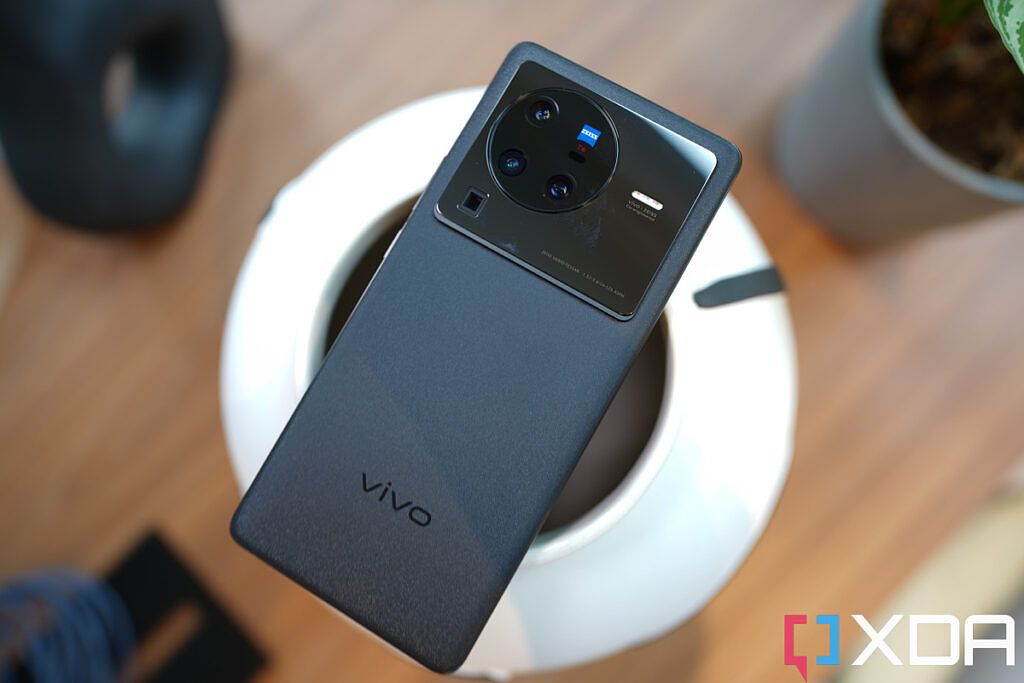
There are lots of phones that can make this list, but considering we named the Vivo X80 Pro the best camera phone of 2022 so far, it’d be hard to not also slot it here in the “best phone not sold in the US” category. As mentioned, the Vivo X80 Pro is a polished tip-top Android flagship that can absolutely compete against Samsung or Apple’s best offerings in display brilliance, processing power, UI fluidity, and camera performance.
The latter, as we already mentioned, is in our opinion the best in mobile right now — just point and shoot with the Vivo X80 Pro anywhere and expect a vibrant, punchy shot with excellent contrast and details. If you live in the US and are open to importing, this is the one to consider.
The Vivo X80 Pro has our vote for the best main cameras of any smartphone right now, and the rest of the package is pretty good too.
There are a lot of good phones to choose from right now, and we hope this guide helped. We think the iPhone 13 Pro is the best all-around option for most, but the Galaxy S22 Ultra, OnePlus 10 Pro and Google Pixel 6 are also very good alternatives. We will update this list regularly so be sure to check back often — or the next time you’re on the market for a new phone.
The post These are the Best Smartphones to buy in 2022! appeared first on XDA.
from XDA https://ift.tt/ZGpfYWS
via
IFTTT